
Cost Of Manufacturing Clothing: Breakdown & Key Factors
When starting a clothing brand, understanding the cost of manufacturing clothing is crucial. The total cost usually includes materials, labor, sampling, and shipping, with prices ranging from about $8 to $30 per piece for basic garments in small batches. These costs can change based on fabric quality, design complexity, order size, and production location.

Many brands underestimate the importance of sampling and prototyping, which are necessary before mass production. Additionally, labor costs vary depending on where the clothing is made and how intricate the design is. Shipping and packaging also add to the final cost, especially for international orders.
By knowing these factors, brands can budget better and price their products wisely. This helps avoid surprises and supports healthier profit margins while scaling production efficiently.
Key Takeways
- Manufacturing costs vary by materials, design, and order quantity.
- Sampling and labor stages significantly impact cost.
- Shipping and packaging fees affect overall production expenses.
Essential Cost Components in Clothing Manufacturing
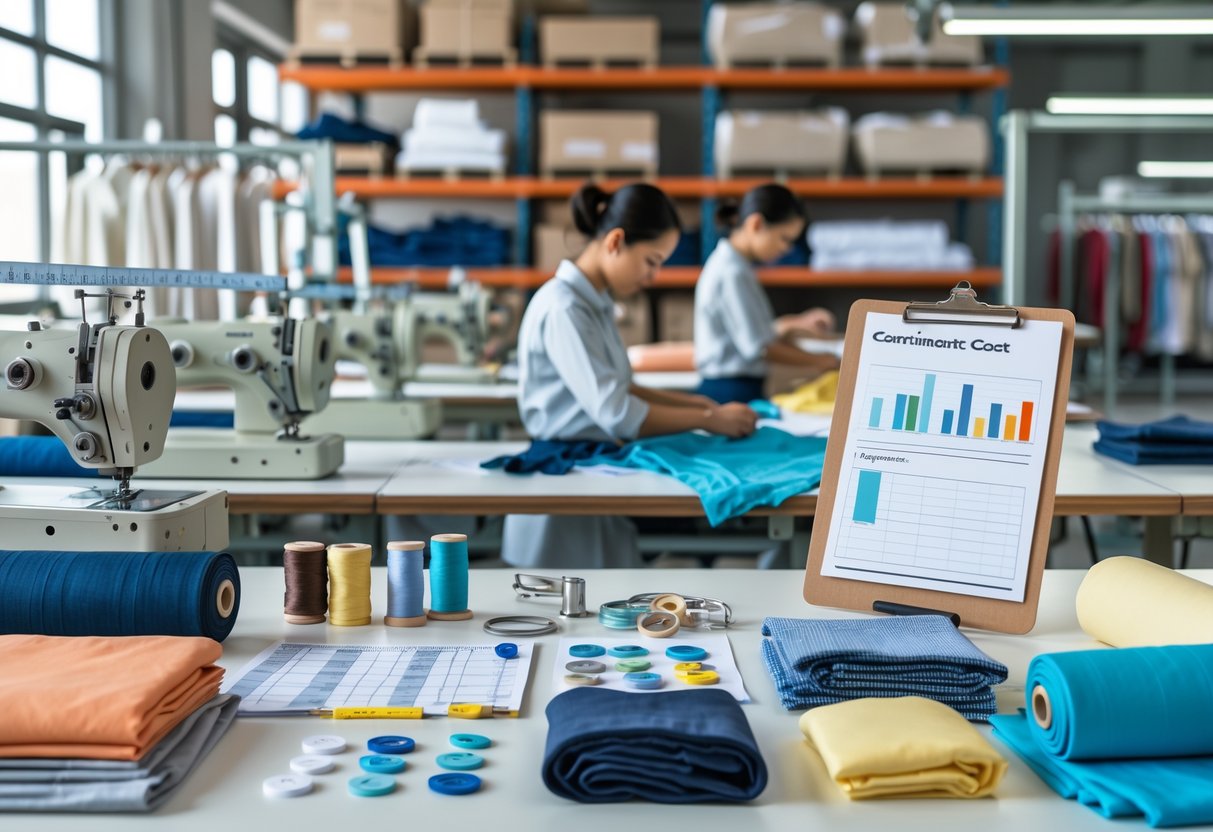
Clothing manufacturing costs come from several key areas, each impacting the total price of the final product. These include raw materials, finishing touches, labor needed to produce the garments, and the costs to keep the factory running. Understanding each part clearly helps in managing expenses and setting accurate prices.
Fabric and Material Expenses for Cost Of Manufacturing Clothing
Fabric costs usually make up the largest portion of clothing manufacturing expenses. The price depends on the type of fabric used, such as cotton, polyester, or specialty blends. Organic or performance fabrics tend to be more expensive.
Minimum order quantities (MOQs) for fabric also affect cost. Buying smaller amounts typically increases the price per yard or meter. The weight and quality of the fabric play a role, as heavier or higher quality materials cost more.
Manufacturers must source fabrics carefully to balance quality and price. Fabric waste during cutting and defects can add to costs, reducing profit margins if not controlled.
Trims and Accessories Cost
Trims and accessories include buttons, zippers, labels, embroidery, and other embellishments. These small details add both style and function but also increase manufacturing costs.
Custom buttons or specially designed zippers raise expenses more than standard options. Embroidery and printing methods like screen printing or digital transfers add labor and material costs. Packaging materials, such as custom polybags or hangtags, can also be included here.
The choice and quality of trims strongly influence the product’s perceived value and retail price, so they must be factored into the total cost carefully.
Labor and CMT Charges
Labor cost covers sewing, assembling, quality checks, and packaging. Known as CMT (Cut, Make, Trim), this part of manufacturing varies widely depending on the garment complexity and location of production.
Simple T-shirts have lower labor costs, roughly $1.50 to $4 per piece. More complex items like hoodies with embroidery or multi-panel designs can cost $5 to $10 or more for labor alone.
Countries with lower wage rates offer cheaper labor but may impact lead time and quality. Managing labor efficiently helps maintain competitive pricing while meeting quality standards.
Overhead and Factory Costs
Overhead costs include rent, utilities, machinery maintenance, and administrative expenses. These indirect costs support the production process but don’t directly tie to any single garment.
Monthly rent for factory space varies widely by location, sometimes ranging from $5,000 to $20,000 for smaller setups. Utilities such as electricity and water add recurring expenses. Machinery like sewing machines, cutting tables, and pressing equipment require upkeep and occasional replacement.
Overhead must be allocated across all units produced to set accurate product pricing. Controlling overhead helps improve profit margins and overall manufacturing cost efficiency.
Preparation and Development Costs

Preparation and development are critical early steps in clothing manufacturing. These involve creating detailed designs, technical documents, and initial garment samples. They also include steps to ensure the product meets quality standards before full production begins. Each part affects the startup costs and timeline.
Pattern Making and Grading
Pattern making turns a clothing design into templates that guide production. A skilled pattern maker creates these templates, ensuring the garment fits correctly and matches the designer’s vision. Accurate patterns reduce errors during sewing and help control costs.
Grading adjusts the pattern for different sizes. It requires precision because a small mistake can cause fit problems. Both pattern making and grading take time and expertise, often costing between $50 and $200 per design. These steps are necessary to produce consistent, well-fitting garments across all sizes.
Tech Packs and Sampling
A tech pack is a detailed instruction sheet for the manufacturer. It includes specifications like measurements, materials, sewing details, trims, and artwork. Clear tech packs minimize misunderstandings and reduce costly revisions. Creating a tech pack can add to startup expenses if the designer lacks one.
Sampling uses the tech pack to make the first version of the garment. It allows designers to check the fit, quality, and design accuracy. Sampling costs typically range from $50 to $300 depending on complexity. Multiple samples may be needed to finalize the product, each adding to the total preparation budget.
Quality Control in Pre-Production
Quality control before production ensures the first samples meet required standards. Inspections cover fabric quality, stitching, measurements, and color accuracy. Identifying problems early prevents costly mistakes in mass production and protects brand reputation.
Startups often invest in quality control to avoid returns and rework. This step includes physical checks and sometimes lab testing. A quality control process may raise initial costs but saves money by reducing defects and waste later in production.
Impact of Order Quantity and Minimums

The quantity ordered directly affects the price per garment and the overall cost to manufacture clothes. Understanding minimum order quantities and production batch sizes can help a brand control costs and manage inventory effectively. Larger orders often lower unit prices but require more upfront investment and storage.
Minimum Order Quantity Concepts
Minimum order quantity (MOQ) is the smallest number of units a manufacturer will produce in one order. MOQs exist because manufacturers need to cover setup costs, materials, and labor efficiently.
The MOQ varies by factory and garment complexity but often ranges from 50 to 300 pieces. If an order is smaller than the MOQ, manufacturers may reject it or charge a higher price per unit.
For brands, MOQs affect how much inventory to hold and the initial cost outlay. Smaller brands may struggle with high MOQs due to limited budgets or storage space.
Batch and Small Batch Production
Batch production means making garments in specific quantities, usually matching or exceeding the MOQ. Small batch production involves lower quantities, often closer to the MOQ or just above it.
Small batch production allows brands to test designs or manage cash flow better by avoiding excess inventory. However, small batches usually come with a higher cost per unit because fixed costs get spread over fewer pieces.
Batch production, especially in larger quantities, provides more consistency and can improve quality control since all units go through the same setup in one run.
Economies of Scale and Bulk Discounts
Economies of scale happen when increasing the order quantity reduces the cost to manufacture each garment. This lowers the price per garment because fixed costs like setup and labor spread over more items.
Manufacturers often offer bulk discounts to encourage larger orders. For example, ordering 500 pieces might reduce the unit price by 10-20% compared to an order of 100 pieces.
While bulk purchasing lowers the unit price, brands must balance savings with added inventory costs and cash flow challenges. Larger orders may also require more warehouse space and increase the risk of unsold stock.
Influence of Design Complexity and Fabric Choice

Both fabric selection and design complexity have a strong impact on the cost of manufacturing clothing. Different fabrics vary in price due to their source and processing needs, while design elements like embroidery or special cuts add labor time and expense.
Fabric Types and Their Costs
Fabric type directly affects material cost. Natural fabrics such as organic cotton, silk, and wool are generally more expensive. Organic cotton requires careful farming, silk involves intensive processing, and wool comes from animal harvesting, making these materials pricier than synthetics.
Polyester and other synthetic fibers cost less because they are manufactured from chemicals in larger quantities. These fabrics often require less care in production and are easier to source.
Higher fabric weight, measured in GSM (grams per square meter), also raises cost. A heavy wool or thick organic cotton fabric will cost more than lightweight polyester. Additionally, dyeing and washing treatments add to the total price, especially if the fabric requires special care or environmentally friendly processes.
Complexity of Design and Embellishment
Complex designs increase production time and require skilled labor. Simple cuts and stitching are less expensive, while garments with embroidery, multiple fabric layers, or detailed features cost more.
Designs with custom elements like laser cuts, zip pockets, or sport-specific stitching need more precise work. Embroidery adds steps to the manufacturing process, requiring machines or handwork that extend production hours.
Sewing patterns that involve many pieces or additional finishes also add to labor costs. This increases the overall price per unit compared to straightforward designs.
Specialty Fabrics and Finishes
Specialty fabrics include items with treatments that improve function or appearance. Examples are waterproof coatings, UV protection, or flame retardant finishes.
These treatments add cost because they require extra materials and processing steps. A polyester jacket with a durable water repellent (DWR) coating will cost more than a plain polyester jacket.
Finishing techniques like softening washes or special dyeing methods can influence price as well. These processes may require longer production times or special chemicals, raising the cost of materials and labor.
Choosing specialty fabrics and finishes must balance budget with product goals to manage manufacturing costs effectively.
Production Location and Regional Price Differences
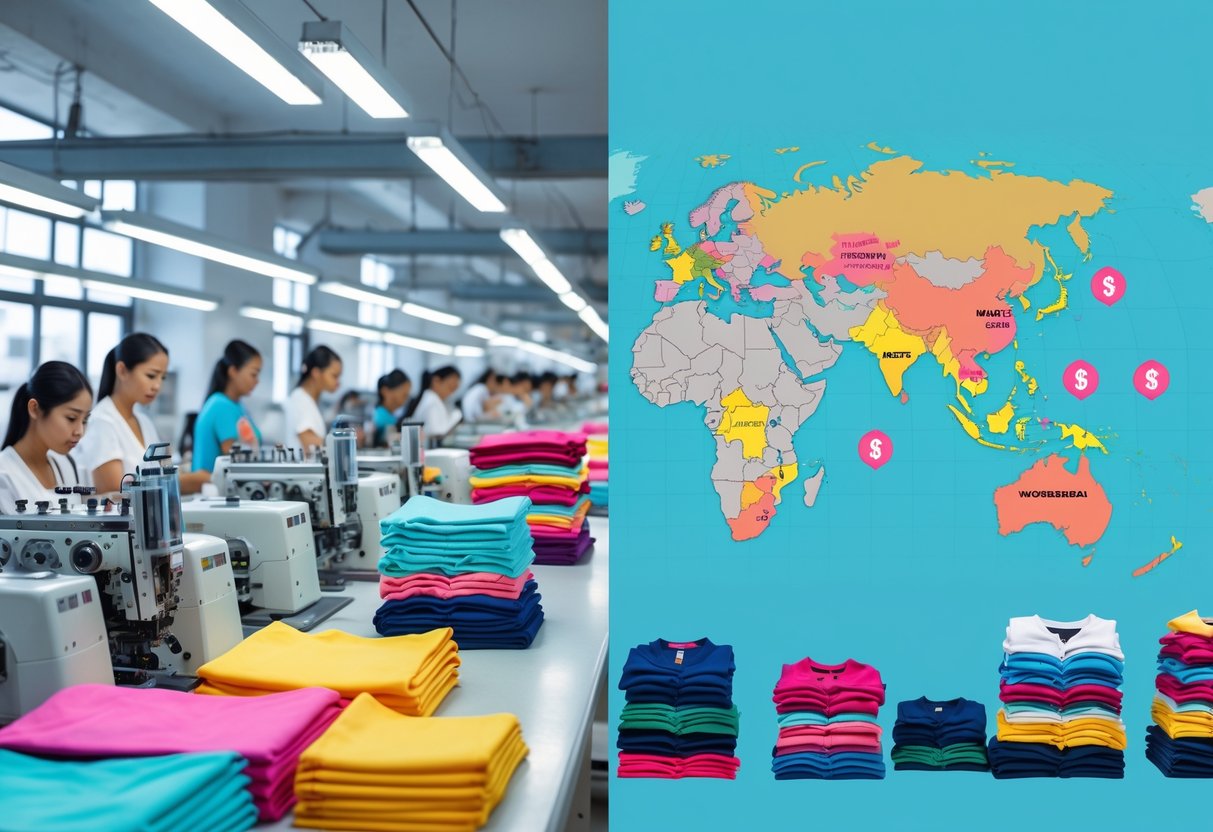
The choice of production location greatly affects manufacturing costs, quality, and timing. Different regions vary in labor costs, material prices, and infrastructure, which all impact final expenses. Production in the United States will differ in cost and speed compared to overseas sites like China or Bangladesh.
Domestic Versus Overseas Production
Domestic production, such as made in the USA, usually involves higher labor costs, often between $15 to $25 per hour. This leads to higher prices but offers benefits like faster communication and better quality control. Apparel manufacturers in the U.S. often aim for smaller runs or premium markets where speed and reliability outweigh cost.
Overseas production, especially in countries like China, Bangladesh, and Vietnam, benefits from much lower labor costs, sometimes as low as $2 to $5 per hour. This results in cheaper production but may mean longer shipping times, increased tariffs, and possible complications with quality standards. Many brands balance cost savings with challenges in managing overseas garment manufacturers.
Cost Structure by Country for Cost Of Manufacturing Clothing
Labor costs are the main driver of price differences between countries. China offers advanced supply chains and moderate labor costs ($3-$5/hour), making mass production efficient. Bangladesh has very low labor costs ($2-$4/hour) but often less developed infrastructure. Vietnam combines affordable wages with improving factory efficiency.
Material costs also vary. Countries with strong textile industries tend to have access to cheaper fabrics and trims. Overhead expenses like factory maintenance and utilities impact prices too, with developed countries generally charging more.
| Country | Labor Cost (per hour) | Material Costs | Manufacturing Strength |
|---|---|---|---|
| USA | $15 – $25 | High | High quality, fast turnaround |
| China | $3 – $5 | Moderate | Large-scale, efficient production |
| Bangladesh | $2 – $4 | Low | Cheap labor, less infrastructure |
| Vietnam | $2.50 – $4.50 | Moderate to low | Growing efficiency, competitive costs |
Production Lead Time Impacts
Production lead time depends heavily on location. Domestic production shortens lead times due to proximity and fewer customs delays. This allows faster product development and responses to market changes.
Overseas production usually has longer lead times caused by shipping duration, customs clearance, and possible delays. For example, orders from Asia commonly take several weeks to arrive. These longer lead times require better planning and larger order quantities to avoid stockouts.
Companies may face increased costs if expedited shipping is needed to meet deadlines overseas. Balancing cost savings with production speed influences the choice of manufacturer location.
Logistics, Packaging, and Post-Production Costs
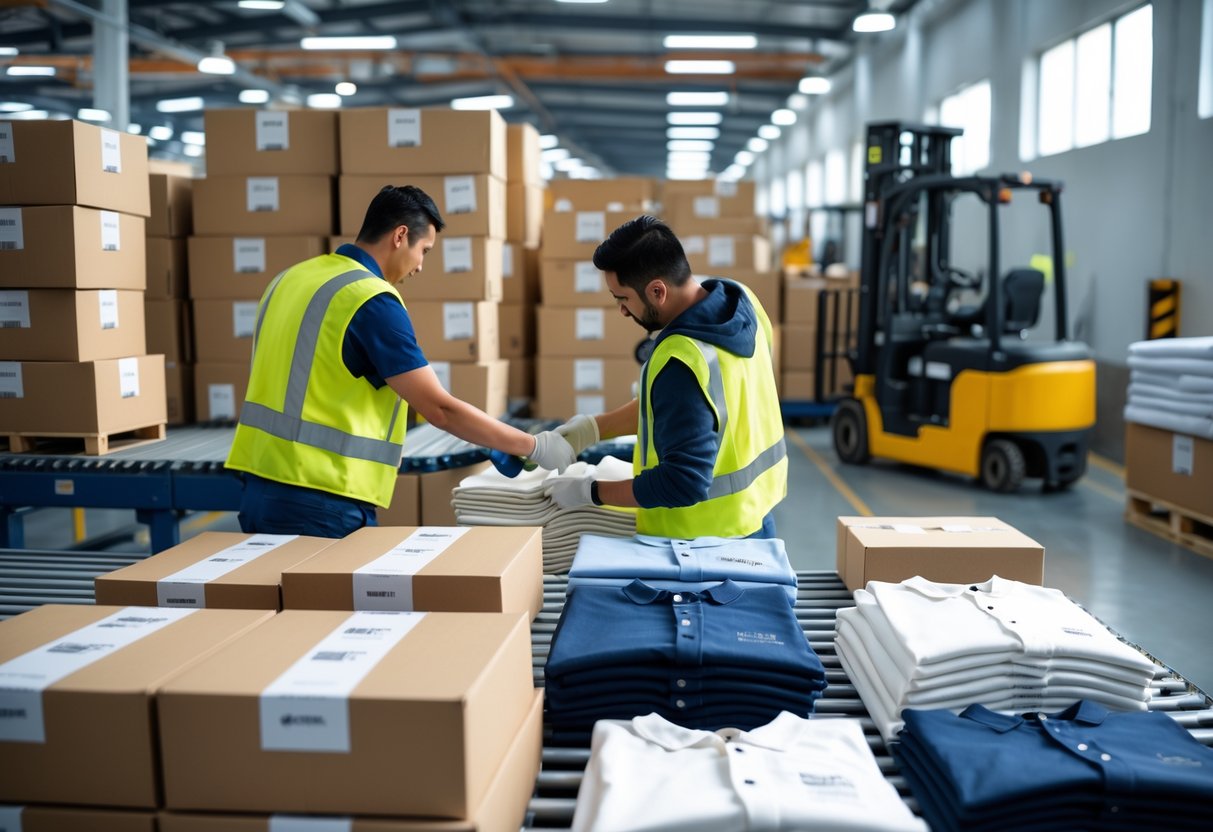
The costs after production include several important expenses like moving finished goods, preparing them for sale, and meeting legal requirements. These costs affect the price and timing of delivering clothing products to customers. Understanding each part helps manage the total production budget better.
Shipping and Freight Charges
Shipping covers transporting garments from the factory to warehouses or stores. Costs vary by distance, shipment size, and mode (air, sea, or land). Sea freight is cheaper but slower, while air freight is faster but more expensive.
Shipping terms such as FOB (Free On Board) define who pays for shipping and when ownership transfers. FOB point typically affects cost responsibility and insurance. Additionally, smaller batches can increase per-unit shipping costs, so order size impacts budgeting.
Logistics planning must include handling fees at ports, customs clearance charges, and possible delays. These all add to the total shipping cost. Efficient routing and consolidation of shipments can reduce expenses.
Packaging and Labeling
Packaging protects products during shipping and influences brand perception. Costs depend on materials, design, and complexity. Basic packaging like poly bags costs less, while custom boxes and printed labels increase costs.
Labeling has two roles: compliance and marketing. Labels must include fiber content, size, care instructions, and sometimes country of origin. Custom labels with logos or special designs raise production costs but help with brand recognition.
Many manufacturers allocate around 10–20% of the total invoice to packaging and labeling. Bulk orders allow negotiation for lower packaging costs. Poor packaging may increase damage rates, raising overall expenses.
Import Taxes and Regulatory Compliance
Import taxes depend on the destination country’s rules and the type of clothing. Tariffs can range from a few percent to over 20%, significantly affecting landed cost. Duties are often calculated on the product value plus shipping (CIF).
Compliance requires filing paperwork, adhering to safety standards, and sometimes acquiring certifications. Noncompliance can lead to fines, shipment delays, or rejection. Fees for permits or inspections are usually part of import costs.
Both import taxes and compliance add hidden charges to manufacturing cost. Businesses often work with customs brokers to navigate paperwork and reduce risks of delays or extra costs.
Cost Calculation Methods and Pricing Strategies

Calculating the total cost of manufacturing clothing requires tracking all expenses linked to garment production. Pricing decisions depend on these calculations and affect both wholesale and retail levels. Clear methods help determine the production cost and set prices that cover costs and secure profit.
Cost Sheets and Costing Formulas
A cost sheet is a detailed document listing every expense involved in making a garment. It includes fabric costs, labor wages, accessories, factory overhead, shipping, and other indirect costs like utilities and maintenance.
Manufacturers use formulas to find the total manufacturing cost, combining fixed costs (like rent and salaries) and variable costs (fabric, machinery hours). The average production cost is found by dividing total costs by the number of units produced.
Bills of Materials (BOM) are common, listing raw materials and their prices. Labor and overhead are added separately. Accurate costing helps create fair prices and avoid losses.
Wholesale and Retail Price Setting
Wholesale price is the cost charged to retailers or bulk buyers. It usually covers the manufacturing cost plus a percentage for profit and operational expenses.
Retail price includes additional costs such as marketing, distribution, and retailer markups. Retailers set this price to cover their expenses and target customers’ willingness to pay.
Prices must stay competitive while balancing profit goals. Understanding the cost to manufacture clothing and market demands helps determine the right price range.
Profit Margin Analysis
Profit margin measures the difference between the selling price and manufacturing cost. It helps manufacturers gauge profitability and make pricing decisions.
Manufacturers calculate gross profit margin by subtracting total production cost from the selling price, then dividing by the selling price. This ratio guides manufacturers on whether their pricing strategies provide enough return.
Managing profit margins involves cutting unnecessary costs without affecting quality. Well-analyzed margins ensure the business can sustain production and growth over time.
Frequently Asked Questions
Cost Of Manufacturing Clothing affect starting and running a clothing manufacturing business. These include initial investments, labor, materials, and equipment. Understanding these costs helps set realistic budgets and pricing strategies.
How much does it typically cost to start a clothing manufacturing business?
Starting costs usually range from $15,000 to $50,000. This depends on factors like the scale of production, level of customization, and type of clothing made. Higher costs come with more products and detailed customization.
What are the primary factors that influence the cost of manufacturing clothing in the USA?
Key factors include raw material prices, labor wages, machinery, factory overhead, and quality control. Labor in the USA tends to be more expensive compared to overseas. Factory expenses like rent, utilities, and legal fees also add up.
What is the average cost to manufacture a single piece of clothing?
Costs vary widely by product and method. For example, a simple printed t-shirt made via print-on-demand can cost about $20. Other pieces, such as jackets or customized items, can cost significantly more.
How can one calculate the cost of manufacturing for different types of clothing items?
Calculating costs involves adding raw materials, labor, machinery use, packaging, quality checks, and overheads. Each item’s fabric weight, design complexity, and quantity produced will impact the final cost.
What types of equipment investments are necessary for starting a garment manufacturing unit?
Essential equipment includes sewing machines ($19,000–$40,000), cutting machines ($2,000–$12,000), finishing machines ($7,000–$50,000), and computers ($2,000–$12,000). These machines vary by scale and product type.
What are the expected profit margins for a clothing manufacturing company?
Manufacturers usually add a fixed percentage above production costs to set prices. Profit margins vary but can range widely depending on efficiency and market demand, often between 10% to 40%.