How to Start a Kids Clothing Line: A Comprehensive Guide
How to Start a Kids Clothing Line is a smart choice in a growing market with plenty of opportunities. Success comes from careful planning, understanding the target audience, and choosing the right products and suppliers. Many new brands fail because they overlook quality, trends, or proper business setup, but these challenges can be avoided with the right approach.
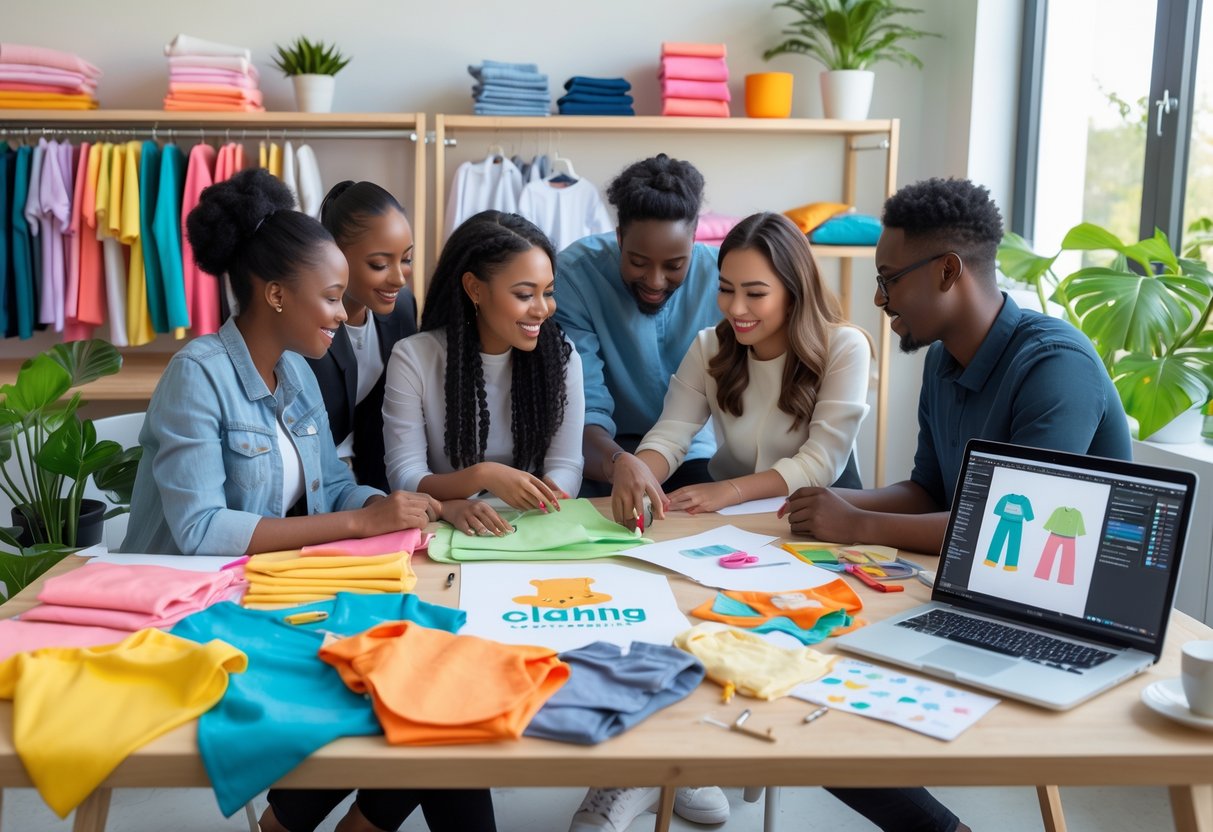
Designing for children means balancing style, comfort, and safety while targeting specific age groups and preferences. A clear brand identity and a solid business plan help set the foundation. From sourcing eco-friendly fabrics to managing production and marketing, every step matters for creating a trusted and lasting brand.
This guide walks through essential steps to launch a kids clothing line that stands out, meets demand, and grows steadily in a competitive industry.
Key Takeways
- Knowing your audience and market trends is crucial for product success.
- Choosing reliable suppliers and focusing on quality protects your brand’s reputation.
- A clear plan and strong brand identity help you launch and grow effectively.
Understanding the Kids Clothing Market
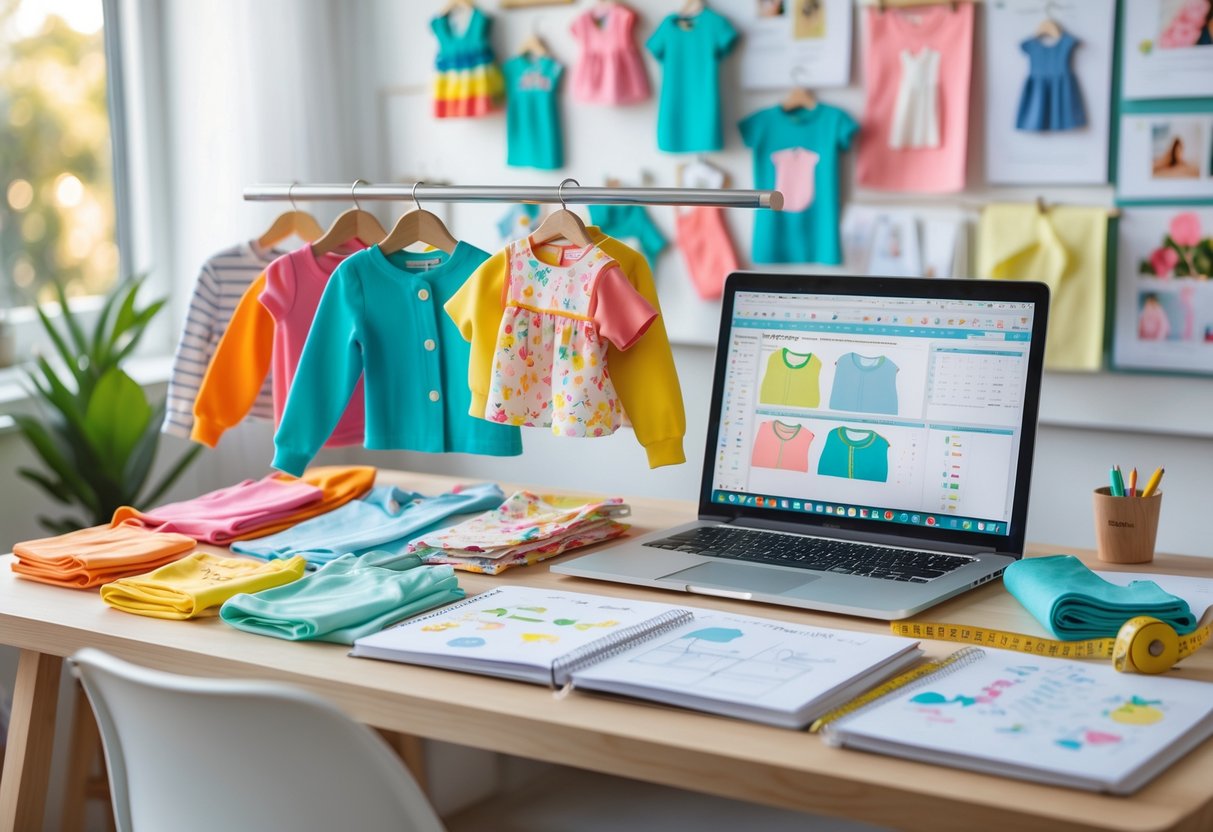
The kids clothing market is growing steadily and offers many opportunities for new brands. Understanding market size, consumer groups, and specific fashion niches helps create products that meet real demand. This knowledge supports smart decisions from design to marketing.
Market Size and Growth Trends
The global kidswear market is expected to reach around $287 billion by 2025. It grows at an annual rate of about 5%. Growth is driven by rising household incomes and more attention to children’s style and comfort.
Sustainability is a key trend, with many parents willing to pay more for eco-friendly kids clothing. Gender-neutral designs are on the rise, growing at about 6.5% annually through 2030. These trends reflect shifts in consumer values that new brands can take advantage of.
New production methods focus on reducing environmental impact, making green manufacturing more common in kidswear.
Key Consumer Demographics
Parents are the primary buyers in the kids clothing market. Understanding their needs depends on the child’s age group, income level, and value priorities. Age categories range from newborns to preteens, each requiring different styles and features.
Millennial parents, who make up a large percentage of buyers, often prefer sustainable and gender-neutral options. Income affects purchasing power and product choice, with middle to high-income families favoring quality and safety.
Knowing parents’ shopping habits, including online versus in-store preferences, helps brands target marketing effectively. Safety and comfort remain top concerns at every age and income level.
Children’s Fashion Niches
Kids clothing lines can focus on several niches to stand out. Popular niches include:
- Eco-friendly clothing: Uses organic or recycled materials. Appeals to parents who prioritize sustainability.
- Gender-neutral designs: Avoid traditional color and style divisions. Gaining traction with modern families.
- Adaptive clothing: Designed for children with disabilities. This niche is growing quickly.
- Seasonal and themed wear: Playful designs tied to holidays, cartoons, or educational subjects attract kids and parents.
- Basics and essentials: Comfortable everyday wear like tees, leggings, and shorts.
Choosing the right niche supports brand identity and shapes product development and marketing strategies.
Conducting Market Research and Competitor Analysis

Successful kids clothing brands start with detailed research and careful study of the market. This helps define who the customers are, understand what competitors offer, and discover gaps where new products can fit.
Identifying Target Audience
Knowing the target audience is crucial in a baby clothing business or kids clothing brand. Research should focus on age groups, income levels, lifestyles, and buying habits of parents or caregivers. For example, some brands target newborns with soft organic fabrics, while others focus on toddlers needing durable playwear.
Data from surveys, social media, and parenting forums can reveal what buyers look for, such as comfort, safety, or style. Clear audience profiles help shape product design and marketing messages that connect directly with customer needs.
Analyzing Competitors
Competitor analysis involves studying other kids clothing brands to identify their strengths and weaknesses. Research top competitors by examining product types, pricing, quality, and marketing strategies.
Key points include whether competitors focus on mass production or niche markets like eco-friendly materials. Noting gaps like lack of customization or trendy designs allows new brands to differentiate themselves. Tools like online reviews and social media feedback provide insights into customer satisfaction with competitor products.
Spotting Opportunities and Gaps
Finding market gaps is about identifying unmet needs or areas where existing brands fall short. This might include offering personalized baby clothing or sustainable fabrics that some competitors don’t provide.
Trends such as eco-consciousness and unique style preferences often create openings for new products. Brands can use this data to develop lines that address these gaps, setting themselves apart in the crowded kids clothing market.
By focusing on real customer demands and competitor weaknesses, a kids clothing brand can position itself for growth.
Brand Development and Positioning
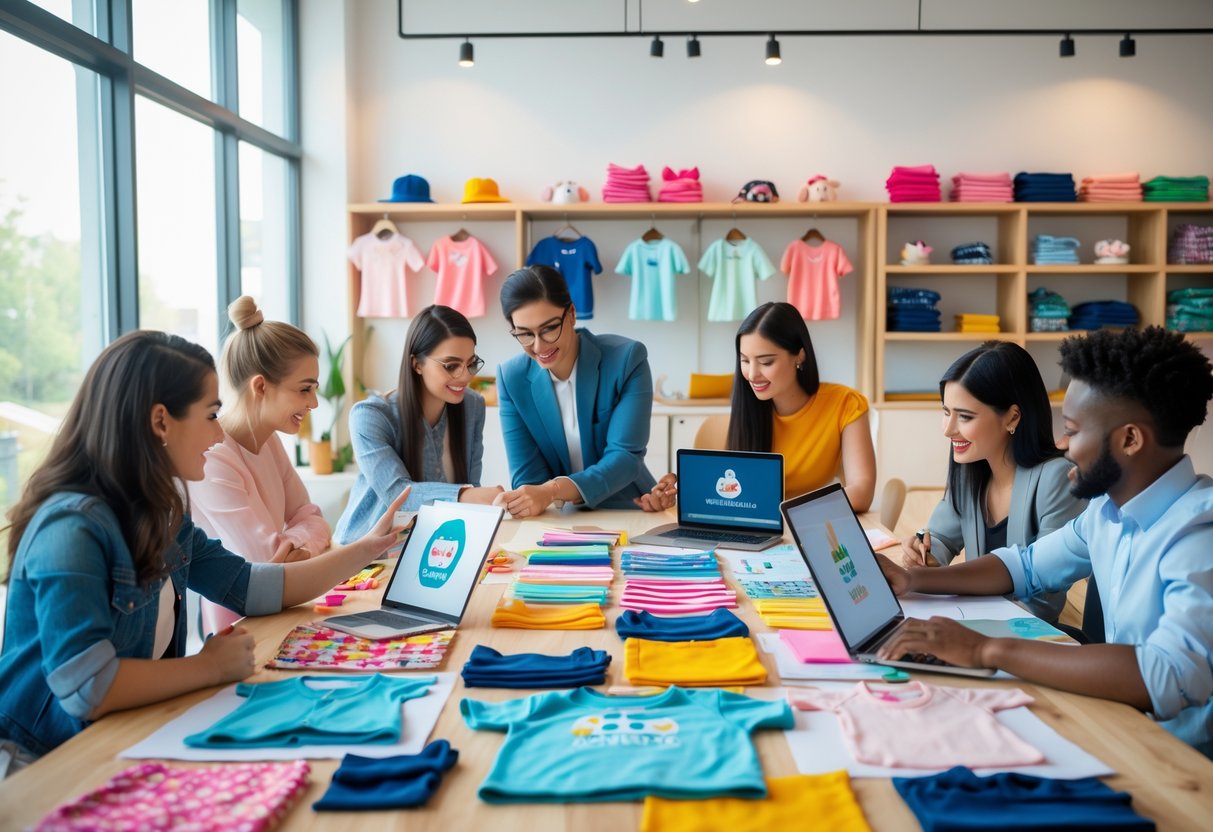
Building a strong brand starts with clear choices about how the kids clothing line will look and feel to customers. It includes deciding what makes the brand different and how to show that clearly through the name and logo. These elements help shape how parents and kids see the brand.
Defining Brand Identity
Brand identity shows what the kids clothing brand stands for and how it connects with customers. It includes the brand’s values, style, and personality. For example, a children’s fashion brand might focus on sustainability, comfort, or playful designs.
The brand’s voice should match its audience. If parents are the main buyers, the tone should be trustworthy and caring. Bright, fun colors and fonts work well to attract both kids and parents visually. Consistency in these choices helps build recognition and trust over time.
Creating a Unique Value Proposition
A unique value proposition (UVP) explains why a customer should choose that kids clothing brand over others. It points out specific benefits, like using organic fabrics, offering gender-neutral styles, or special adaptive features for kids with sensory needs.
The UVP should be simple and clear. For example: “Soft, eco-friendly clothes that grow with your child” or “Durable designs for active toddlers”. This message guides all marketing and product decisions and helps the brand stand out in a busy market.
Naming and Logo Creation
Choosing the right name is critical. It should be easy to say, remember, and spell. The name must also reflect the brand’s personality and appeal to parents and children alike. Names like “Tiny Trendsetters” or “Playful Threads” suggest fun and creativity.
The logo is the visual face of the brand. It should use child-friendly fonts and colors that support the overall identity. Adding simple icons like animals or stars can make the logo more engaging. The logo must be versatile to work on tags, websites, and ads with equal impact.
Product Design and Collection Planning
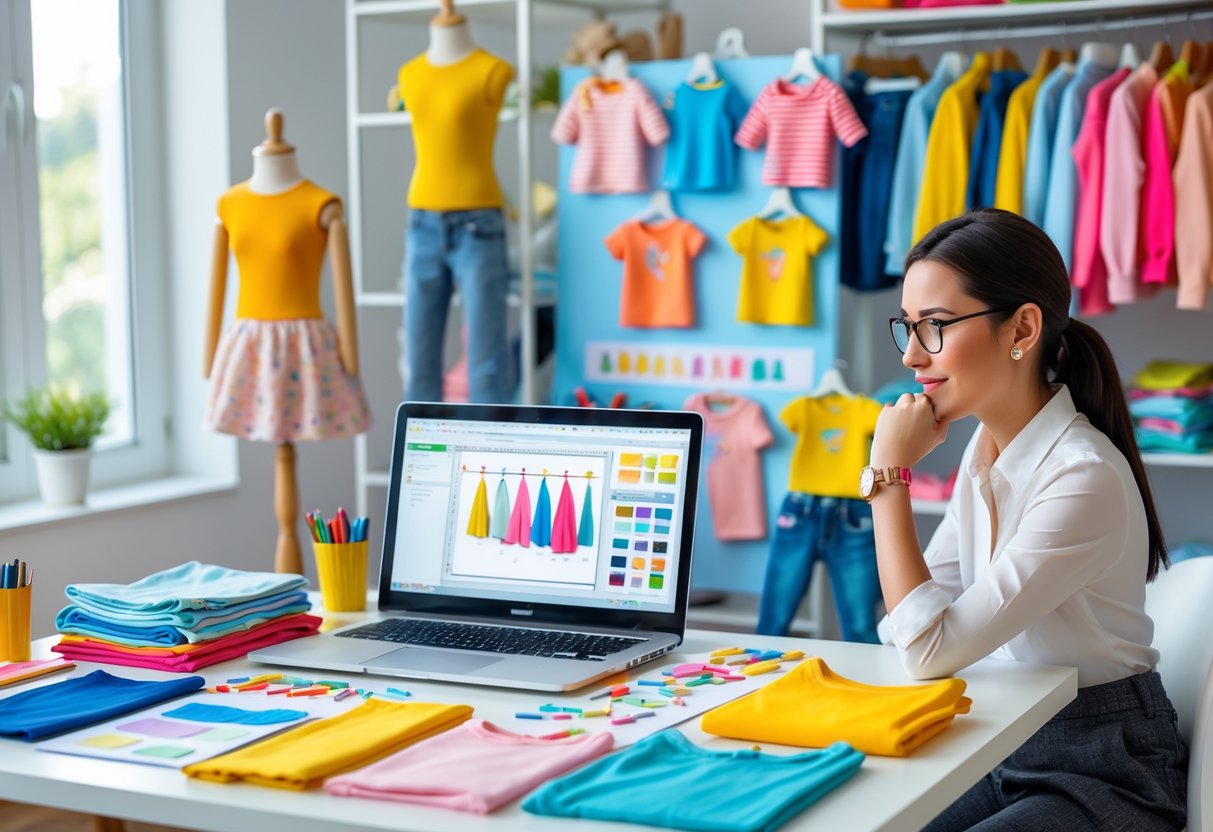
Creating a kids clothing line means balancing style with practicality. Designs must focus on comfort and safety while using appealing colors and prints. Planning collections around seasons and building a unified theme helps keep the brand organized and attractive to parents and children alike.
Designing for Comfort and Safety for How to Start a Kids Clothing Line
Comfort is the top priority in children’s fashion. Fabrics should be soft, breathable, and non-irritating to sensitive skin. Organic cotton and bamboo are popular choices for baby clothes because they reduce the risk of allergies and discomfort.
Safety means avoiding small parts that could be choking hazards. Clothing should feature secure fastenings like snap closures and elastic waistbands that are easy to use. Flame-resistant fabrics are essential for sleepwear to meet safety standards and protect children during the night.
Durability is also important. Kids are active and clothes should withstand wear and tear without shrinking or losing shape.
Selecting Print, Color, and Style
Prints and colors attract both kids and parents. Bright, playful colors and fun patterns like animals, space, or nature themes engage children’s imaginations. Gender-neutral colors such as teal, orange, and purple are rising in popularity, especially among millennial parents.
Styles should fit the intended age group. For example, soft pastel tones and simple designs suit babies, while bold prints work well for toddlers and older kids. Comfort features like stretchy fabrics and adjustable straps add to wearability.
Using non-toxic dyes ensures safety and environmental responsibility. Simple basics like solid tees balance out more decorative pieces, allowing for versatile outfits.
Planning Seasonal Collections for How to Start a Kids Clothing Line
Seasonal collections help brands stay fresh and relevant. Planning usually involves creating 2-3 themes per season, each with a focused color palette and design style.
For spring and summer, lightweight fabrics and bright colors are ideal. Autumn and winter collections use warmer materials like fleece and thicker cotton. Including functional items such as raincoats for wet seasons or insulated jackets for cold months meets practical needs.
Timing production and delivery to match seasonal demand is critical. Smaller initial runs allow testing market response before scaling up.
Cohesive Collection Building
A strong collection tells a consistent story. Coordinating styles, colors, and themes across all pieces makes shopping easier for parents and appealing to kids.
Each collection should balance basics with statement pieces. Basics include solid leggings, tees, and shorts. Statement items might have unique prints or interactive features like reversible designs or appliques.
Grouping 20 to 30 SKUs per collection offers variety without overwhelming choices. Keeping designs age-appropriate and matching the brand’s identity helps create lasting customer loyalty.
Sourcing Materials and Manufacturing
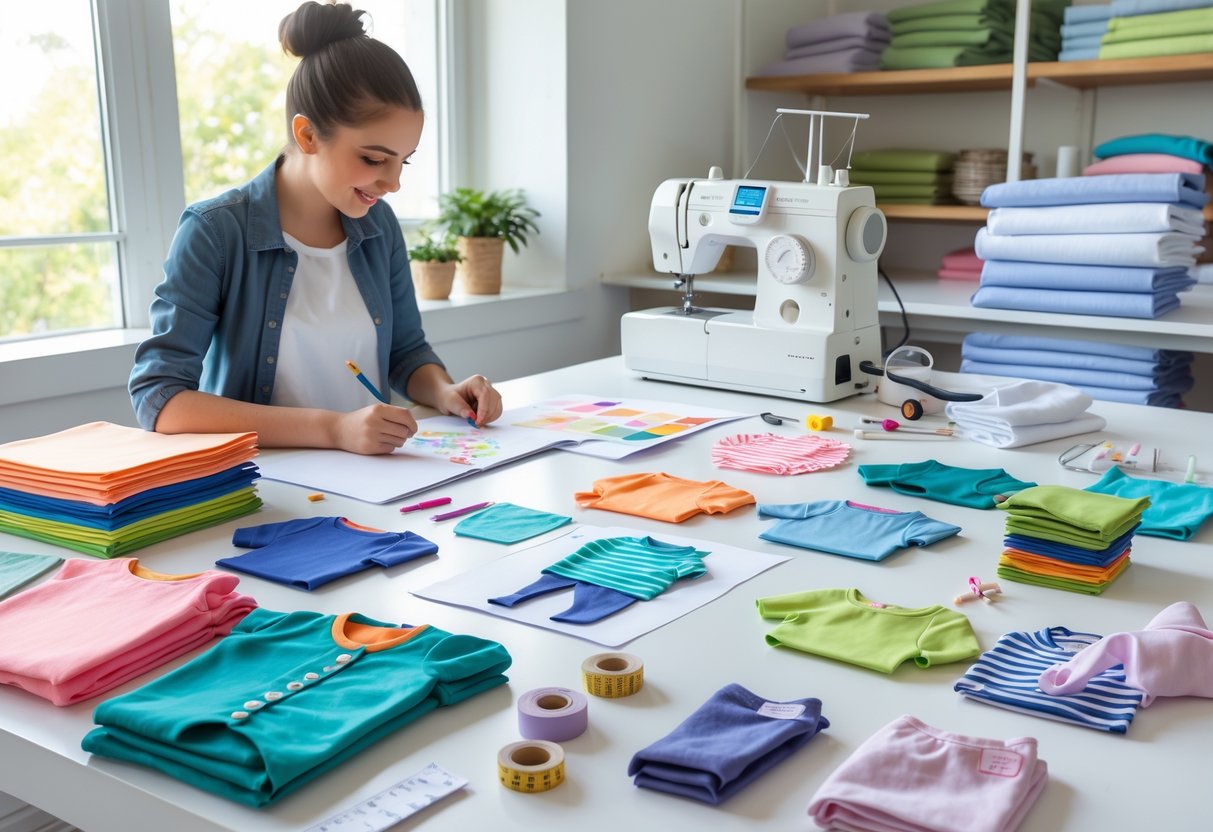
Sourcing materials and managing manufacturing are critical steps that affect product quality and brand reputation. Choosing the right fabrics, reliable manufacturers, and understanding order requirements help ensure smooth production. Quality control and careful sampling protect against costly errors and maintain customer trust.
Choosing Appropriate Fabrics
Selecting the right materials is essential for kids’ clothing. Fabrics must be soft, breathable, and durable to suit sensitive skin and active use. Common choices include organic cotton, bamboo, and modal, which are gentle and eco-friendly. Organic cotton is popular because it is grown without pesticides, reducing health risks for babies and older kids alike.
Safety is a priority. The materials must be free of harmful chemicals and meet regulatory standards, especially for baby clothes and sleepwear. Fabrics that resist shrinking and retain color after washing add value. Many brands prefer sustainable fabrics due to growing demand from eco-conscious parents.
Selecting Kids Clothing Manufacturers
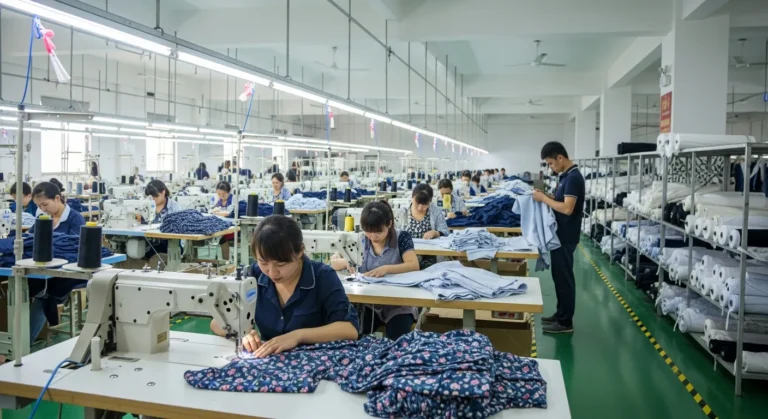
Finding a reliable kids clothing manufacturer is key to consistent quality and timely delivery. It is important to choose manufacturers experienced in children’s apparel who follow ethical labor practices. Certifications like GOTS (Global Organic Textile Standard) or Fair Trade show a commitment to sustainability and fair treatment of workers.
Manufacturers should be able to meet safety standards specific to kids’ clothing, including flame resistance for sleepwear. Those with good communication and transparent processes help reduce production delays. Sourcing locally or from established clothing manufacturers in countries known for quality can also ease supply chain risks.
Understanding Minimum Order Quantities
Minimum order quantities (MOQs) affect startup costs and inventory management. Many kids clothing manufacturers set MOQs between 100 and 500 pieces per design or style. Higher MOQs might reduce cost per unit but increase financial risk and storage needs.
For new brands testing the market, smaller production runs are preferable. This allows adjustment based on customer feedback. Entrepreneurs should negotiate MOQs carefully and consider manufacturers that offer flexibility, especially when scaling from samples to full production.
Quality Control and Sampling
Quality control safeguards the final product’s safety and durability. Regular sampling before full production helps identify issues with fabric, colorfastness, seams, and trims. Samples allow testing for washing behavior, shrinkage, and adherence to safety rules.
Manufacturers who provide detailed inspection reports improve trust and prevent costly mistakes. Kids clothing quality control focuses on eliminating choking hazards, toxic materials, and weak stitching. Consistent quality builds brand loyalty and reduces returns or complaints. Sampling is often the first real check on the production process and product standards.
Legal Requirements and Compliance

Starting a kids clothing line requires meeting specific legal rules to operate safely and avoid penalties. These rules include registering the business correctly, following strict safety standards for children’s products, and protecting designs and brand identity through intellectual property.
Registering Your Business
The first step is choosing the right business structure, such as an LLC, sole proprietorship, or corporation. This establishes legal identity and affects taxes, liability, and growth options.
Obtaining an EIN (Employer Identification Number) from the IRS is essential for tax purposes. The business must also secure a retail sales tax permit to collect taxes legally from customers.
If selling baby clothing or kidswear from a physical store, local permits like a certificate of occupancy and zoning approval are required. These ensure the location complies with safety and use rules.
Understanding Safety Standards
All children’s clothing must meet the Consumer Product Safety Improvement Act (CPSIA) standards in the U.S. These rules limit harmful chemicals like lead and regulate flammability.
Clothes intended for babies and young children have stricter guidelines. Labels must include fiber content, washing instructions, and country of origin. Tags also need to state if the item contains drawstrings or other hazards.
Manufacturers must test samples regularly to ensure products stay compliant. Non-compliance can lead to recalls, fines, or bans from selling certain products.
Intellectual Property Protection
Securing intellectual property rights is critical to protect unique designs and brand names in the kidswear market. Trademark registration safeguards the brand logo and name from being copied by competitors.
Design patents or copyrights can protect original prints, patterns, or clothing designs. This prevents others from manufacturing or selling similar styles.
Business owners should also consider contracts with manufacturers to keep design ownership clear. Protecting intellectual property helps create brand trust and avoids costly legal disputes.
Building a Business Plan and Launch Strategy

A strong business plan and clear launch strategy help guide all steps of starting a kids clothing line. It sets goals, plans production, decides how to sell products, and prepares for growth. Careful planning in these areas improves chances of success and smooth operations.
Setting Financial Goals and Pricing
Setting clear financial goals is essential. Start by estimating startup costs, including design, materials, manufacturing, and marketing. Typical initial investments range from $50,000 to $150,000 for a small kids clothing brand.
Pricing should cover costs while offering competitive margins. Most new brands aim for 20-30% gross margin to remain profitable. Research competitors’ pricing to position products right. Pricing must reflect product quality, brand identity, and target customers’ willingness to pay.
Create short-term and long-term financial targets. For example, break-even within 18-24 months is common. Track sales regularly and adjust prices or costs based on market response.
Production Planning
Production planning ensures quality and timely delivery. First, choose fabrics that are safe and suitable for children, like organic cotton or bamboo. Confirm suppliers follow safety standards and certifications like GOTS.
Determine minimum order quantities (MOQs). Many manufacturers require 100-500 pieces per style. Small runs help test the market without overstocking.
Establish quality control rules to avoid defects and returns. Plan production schedules carefully to meet launch deadlines. Consider eco-friendly production methods for sustainability, a growing trend in kids clothing.
Distribution Channels
Choosing the right channels impacts sales and brand visibility. Online stores offer wide reach with lower costs and easy scalability. Marketplaces like Shopify or Etsy are popular choices for new kids clothing brands.
Retail partnerships can add credibility and access to local customers. Small boutiques or children’s stores may welcome unique or niche kids lines, such as organic or gender-neutral clothing.
Direct-to-consumer events like pop-up shops help build brand awareness and customer relationships. Combining channels diversifies income and reduces risk.
Scaling Up Operations
Scaling up means increasing production, expanding marketing, and growing the customer base. Start by analyzing sales data to identify best-selling products and popular markets.
Work with reliable manufacturers who can handle larger orders as demand increases. Investing in automation for order processing and inventory management improves efficiency.
Expand your product range slowly, adding styles or accessories that fit your brand. Use customer feedback to refine offerings.
Focus marketing on building loyalty and word-of-mouth. Consider collaborations or influencer partnerships to reach wider audiences. Planning growth carefully avoids overstretching resources.
Marketing and Growing Your Kids Clothing Line
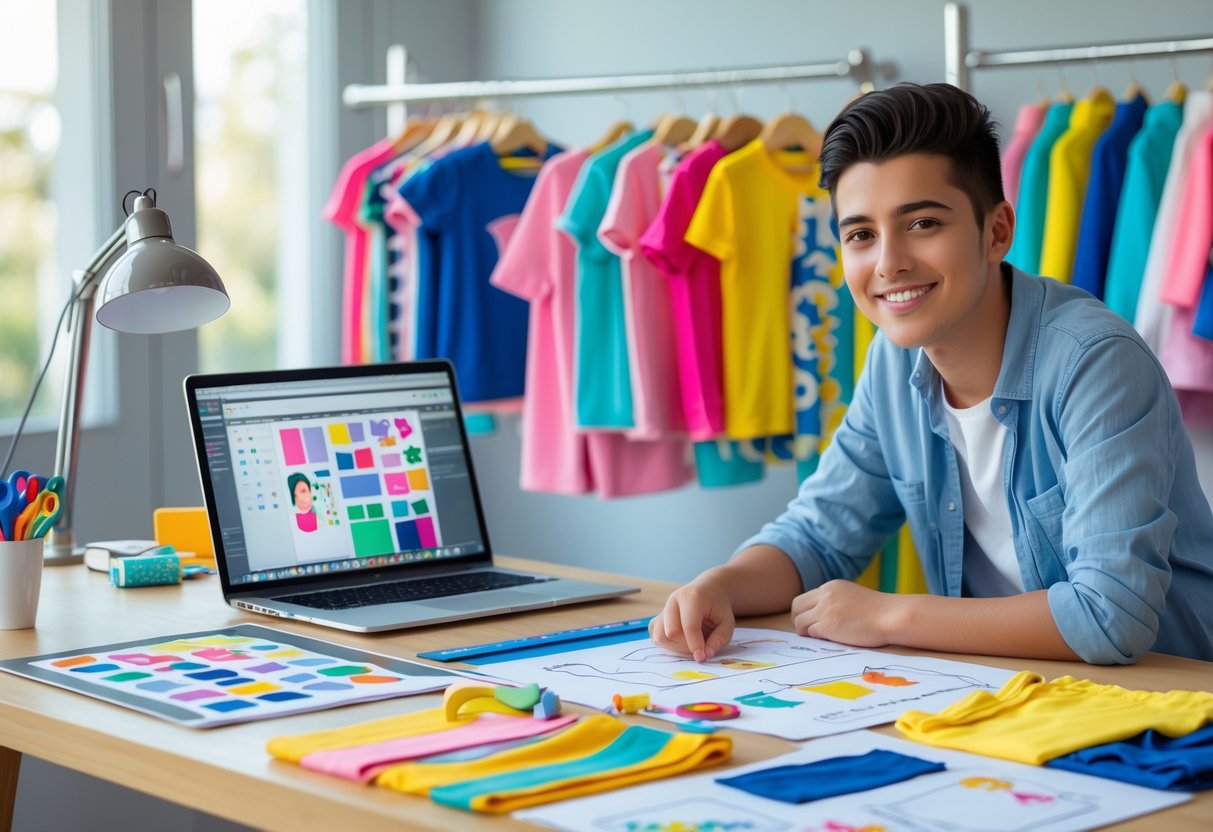
Effective marketing helps a kids clothing line reach the right audience and boost sales. It requires building a strong online presence, using content and email marketing, and forming partnerships that increase visibility and trust.
Building an Online Presence
A solid online presence is essential. It starts with a clean, easy-to-navigate website showcasing the collection clearly with high-quality photos and detailed product descriptions.
The website should be mobile-friendly, as many customers shop on phones. Adding features like size guides, customer reviews, and easy checkout improves the shopping experience.
Social media channels such as Instagram, Facebook, and Pinterest are valuable for sharing new designs, behind-the-scenes content, and promotions. Consistent posting and engaging with followers help build a loyal community.
Search engine optimization (SEO) is also important. Using keywords related to kids clothing and sustainability (if applicable) helps bring organic traffic to the site.
Leveraging Content Marketing
Content marketing builds trust and attracts customers by sharing valuable, relevant information. This can include blog posts about kids’ fashion trends, parenting tips, or how to care for children’s clothes.
Creating videos or tutorials on styling kids’ outfits adds value and encourages sharing. Educational content related to safety or sustainable fabrics can highlight the brand’s strengths.
Posting such content regularly improves the brand’s authority and helps with SEO. It also provides material for social media and email marketing campaigns.
Using clear, engaging language ensures parents understand and connect with the message.
Implementing Email Marketing
Email marketing keeps customers informed and encourages repeat purchases. Collecting email addresses through website sign-ups, offers, or contests is the first step.
Sending regular newsletters with new product launches, exclusive discounts, and helpful content keeps the brand top-of-mind. Personalizing emails by segmenting the audience—for example, by age group or past purchases—boosts engagement.
Including strong calls to action, such as “Shop Now” or “Save 15% Today,” helps drive sales. Monitoring open and click rates lets the brand adjust strategies to be more effective.
Emails should be visually appealing and mobile-friendly to increase readability.
Collaborations and Influencer Partnerships
Partnering with other brands or influencers expands reach. Collaborations with kid-focused businesses such as toy brands or kids’ activity centers attract new customers and provide cross-promotion opportunities.
Working with influencers who specialize in parenting or children’s fashion helps the brand gain credibility. Influencers can showcase the clothes in real-life use, which builds trust with their followers.
Choosing influencers who align with the brand’s values and target audience is critical. Micro-influencers often offer high engagement rates and a loyal following.
Clear agreements on deliverables and compensation ensure smooth partnerships and better results.
Frequently Asked Questions
How to Start a Kids Clothing Line requires careful planning, from initial research to finding the right partners. It involves setting clear business goals, managing finances, and reaching the right customers.
What initial steps are needed to launch a children’s clothing brand?
The first step is to research the market and understand your target customers. Define the age groups and styles you want to focus on. Next, develop your brand identity, including a name and logo.
Design a collection that fits your niche. Then, find manufacturers and suppliers who can produce quality clothing. Finally, set up your business structure and legal requirements.
Where can I find manufacturers for my kids clothing line?
Manufacturers that specialize in children’s apparel are available worldwide. Many new brands start with suppliers in China, Cambodia, or countries known for textile production.
Look for factories that offer small minimum order quantities (MOQs) to test your designs at a lower cost. Certified suppliers with ethical and sustainable practices are preferred. Online platforms and trade shows are useful places to start your search.
How can I create a business plan for a children’s clothing store?
A business plan should include an executive summary with your mission and goals. List your product offerings clearly, specifying size ranges and styles.
Outline your operations plan, including production and inventory management. Include financial projections such as startup costs, sales forecasts, and break-even points. Define how much funding is needed and how it will be used.
What are the estimated startup costs for a children’s clothing business?
Startup costs usually range from $50,000 to $150,000. This covers design, manufacturing, marketing, and initial inventory.
Costs vary based on product range, production scale, and business location. It’s essential to budget for unexpected expenses and marketing campaigns.
What are some effective marketing strategies for a new kids clothing line?
Social media marketing is critical to reach parents and caregivers. Influencer partnerships can help increase brand awareness.
Creating an online store with clear branding and product details builds trust. Offering limited editions or seasonal themes can attract repeat customers. Focus on sustainability in marketing to appeal to eco-conscious parents.
How profitable is entering the children’s apparel market?
The children’s clothing market is growing, with expected annual growth of around 5% to 6.5%. The global market is worth hundreds of billions of dollars, showing strong demand.
Profitability depends on managing costs, quality, and effective marketing. Niche segments like organic, adaptive, or gender-neutral clothing offer additional opportunities.