10 Types of Panties for Your Wardrobe Essential Guide to Comfort & Style
Choosing the right types of panties is important for comfort and style. Different styles suit different outfits and occasions, making it helpful to have a variety in a wardrobe. Understanding these options helps people pick what works best for their needs.
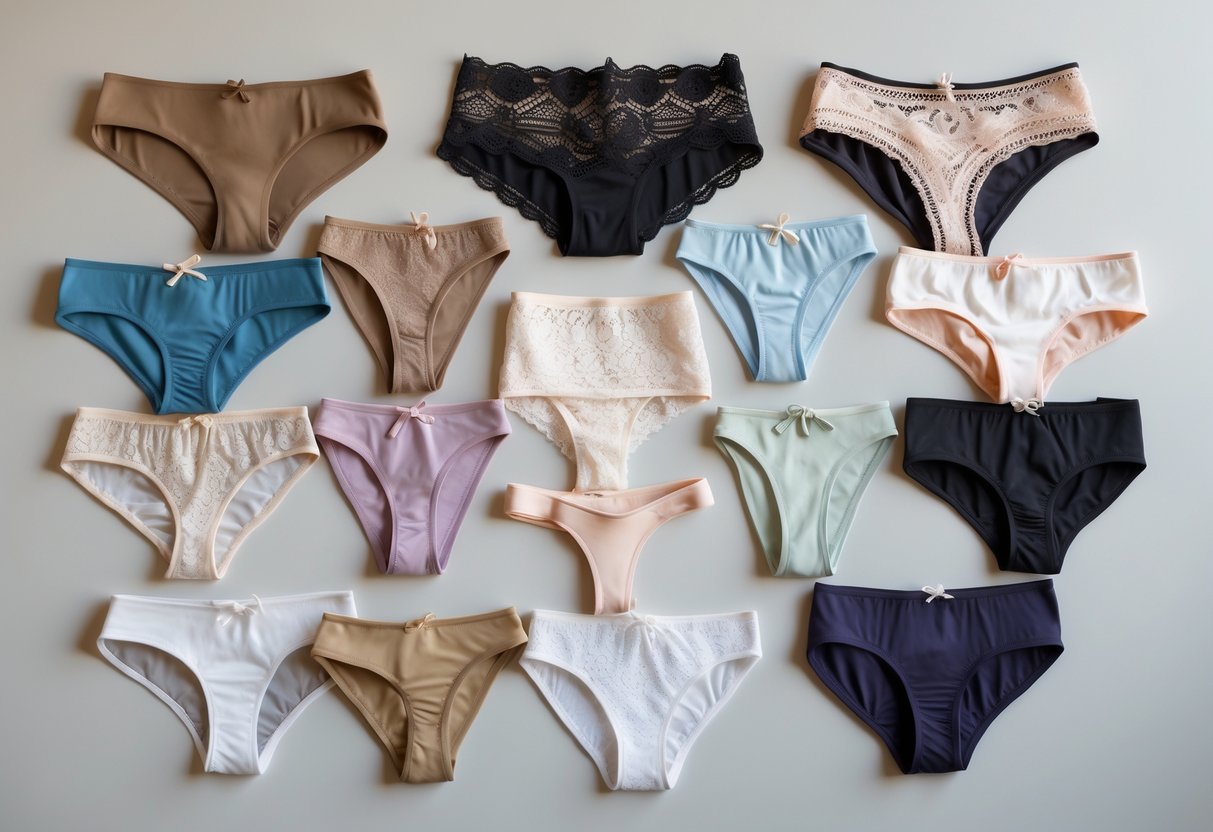
A well-rounded collection of panties offers both comfort and practicality for everyday wear and special events. Having the right underwear can improve how clothing fits and feels throughout the day.
1) Briefs
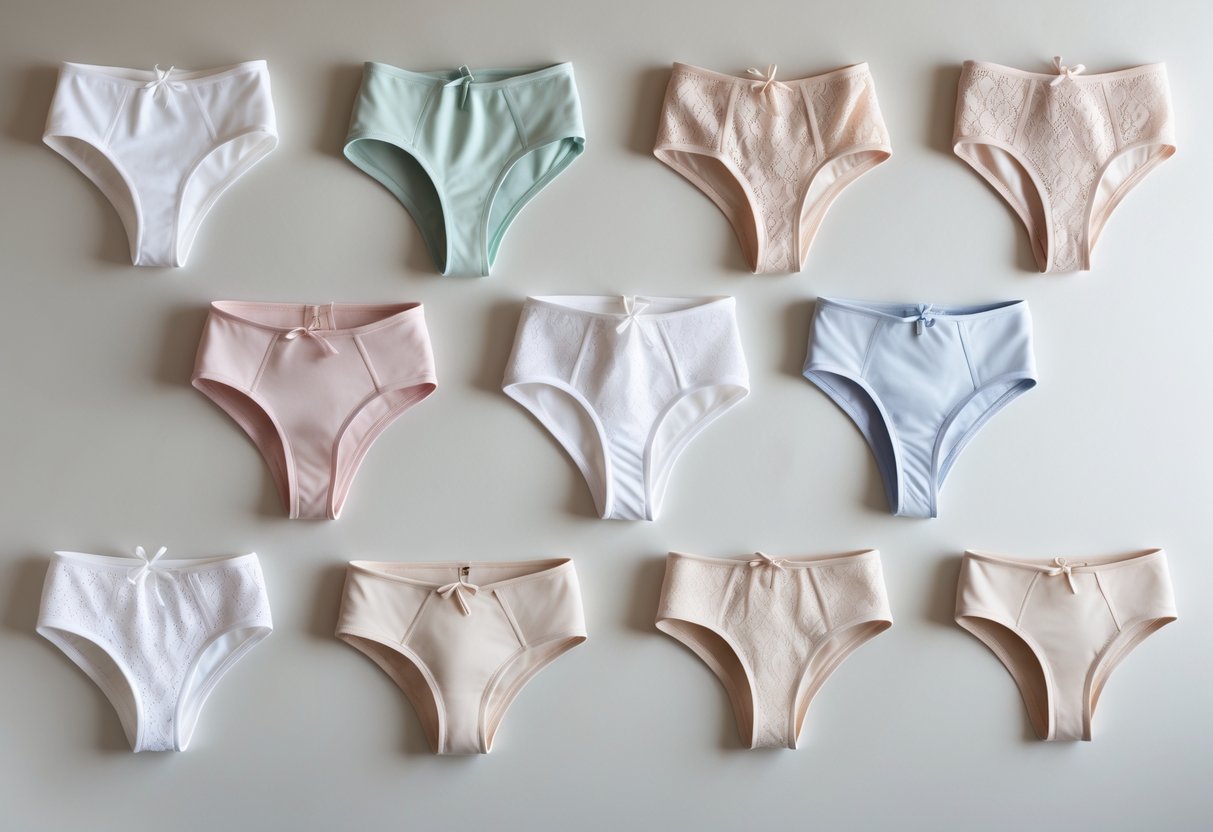
Briefs are one of the most classic and common types of panties. They have a low-rise waistband that usually sits below the hips. This design helps prevent the underwear from showing over pants or skirts.
The front of briefs tapers slightly, while the leg openings are cut low. This style provides full coverage in the back, making it a comfortable choice for many. Briefs offer good support without being too tight.
People often wear briefs with jeans, dresses, or skirts because they stay hidden and do not create visible lines. They come in different fabrics, like cotton for breathability or blends for stretch.
Briefs suit many body types and are a practical choice for everyday wear. They balance comfort and coverage, which many prefer for regular use.
2) Boyshorts
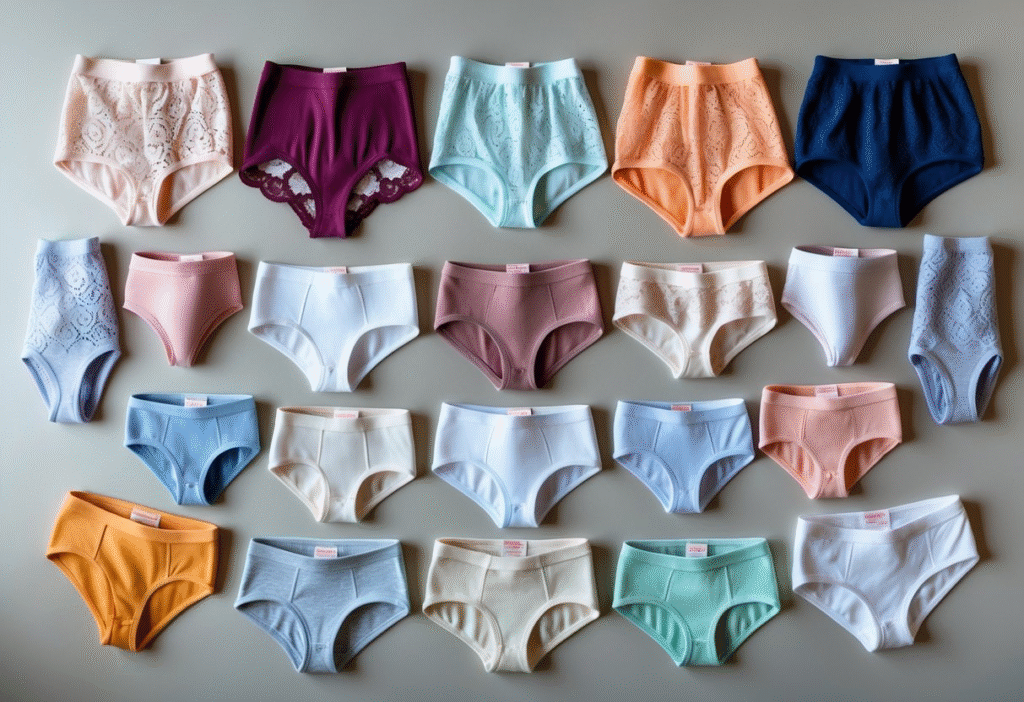
Boyshorts are a type of panties that offer more coverage than traditional underwear. They have a rectangular shape and usually cover the hips and upper thighs. This style is often compared to boxer shorts designed for women.
They are popular for their comfort and support. Many women choose boyshorts for everyday wear because they stay in place and avoid riding up. The smooth fit also works well under tight clothing.
Boyshorts come in various fabrics and cuts. Some have a high waist for extra support, while others sit lower on the hips. This variety makes it easy to find a pair for different occasions and outfits.
This underwear style is known for blending practicality with style. It provides good coverage without feeling bulky, making boyshorts a versatile choice in many wardrobes.
3) Bikinis
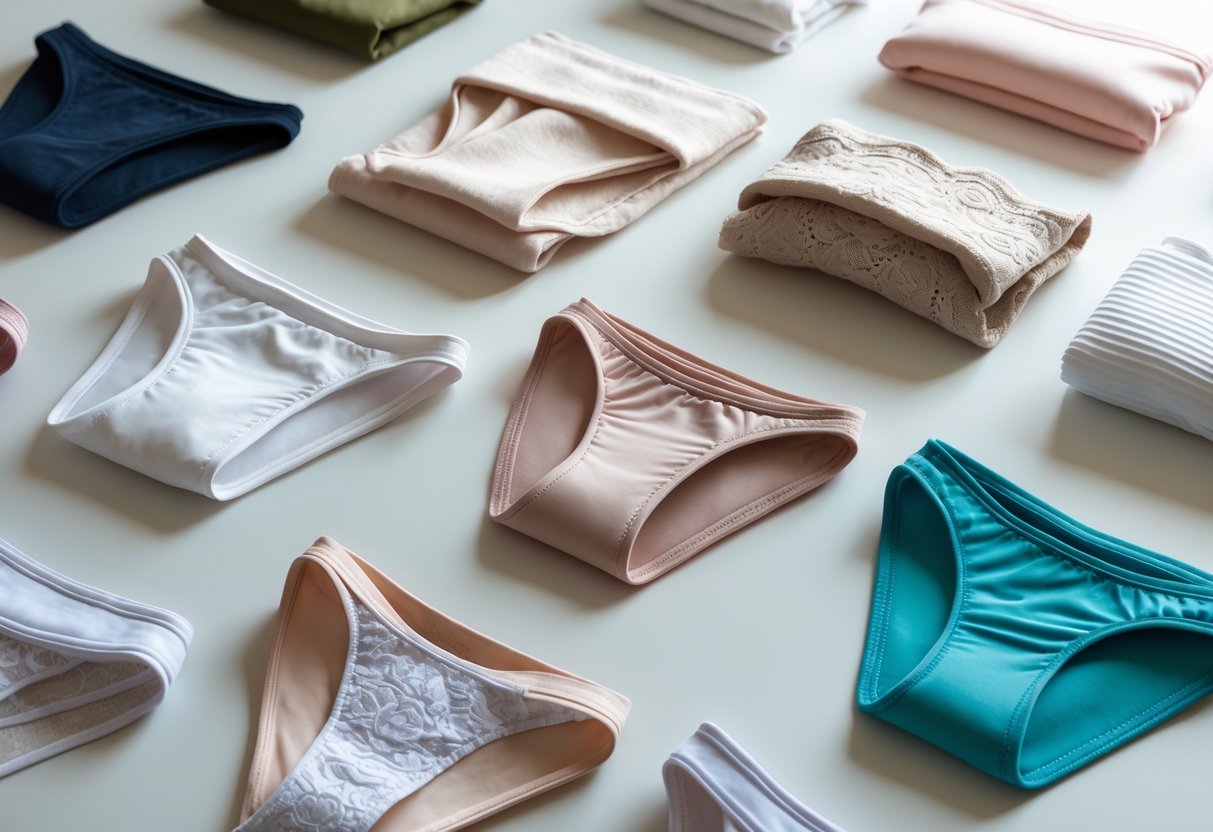
Bikinis offer moderate coverage at the back and a higher cut on the leg. This design shows more of the hip while keeping a comfortable fit. The front often tapers in a V shape, similar to a bikini swimsuit.
They sit lower on the hips, making them a good choice for low-rise pants and skirts. Bikinis work well under tight or fitted clothing because they reduce visible lines.
This style balances comfort and a modern look. Many consider bikinis a classic piece that fits different body types and daily needs. They can be made from various fabrics like cotton or lace, depending on personal preference.
Bikinis suit casual wear as well as more dressed-up outfits. They are a popular choice for those who want a mix of style and comfort without too much exposure.
4) Hipsters
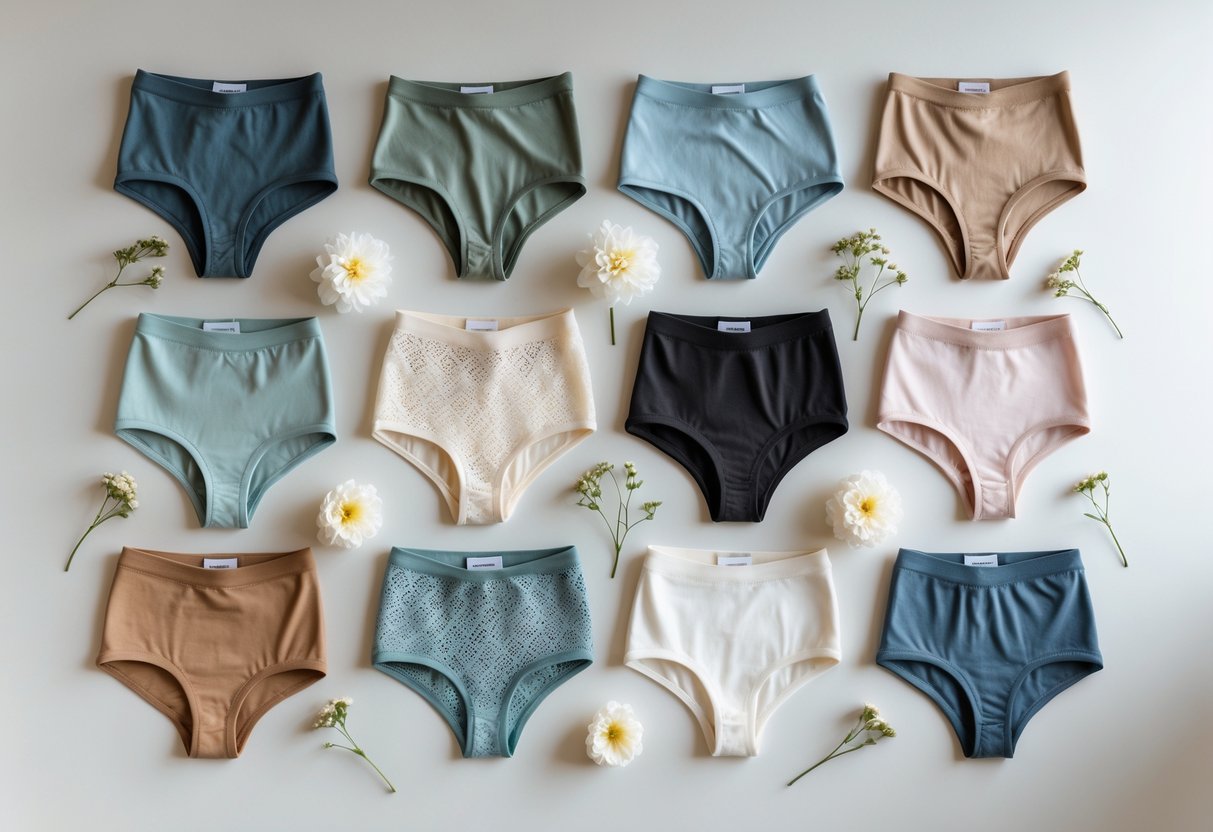
Hipsters sit low on the hips and offer moderate coverage on the front and back. They cover the hips fully without extending too high on the waist. This design makes them comfortable for many body shapes and ideal for everyday wear.
They often provide a smooth look under clothes, especially when made with seamless fabric. This feature helps reduce visible panty lines, making hipsters a good choice for fitted outfits.
Hipsters come in various fabrics like cotton, lace, and microfiber. Choosing the right material is important for comfort and breathability. Cotton hipsters are good for daily use, while lace adds a stylish touch.
The style balances comfort and a flattering fit. It works well for those who want coverage without the bulk of full briefs or the minimalism of a thong. Many women find hipsters suit both casual and dressy occasions.
5) Thongs
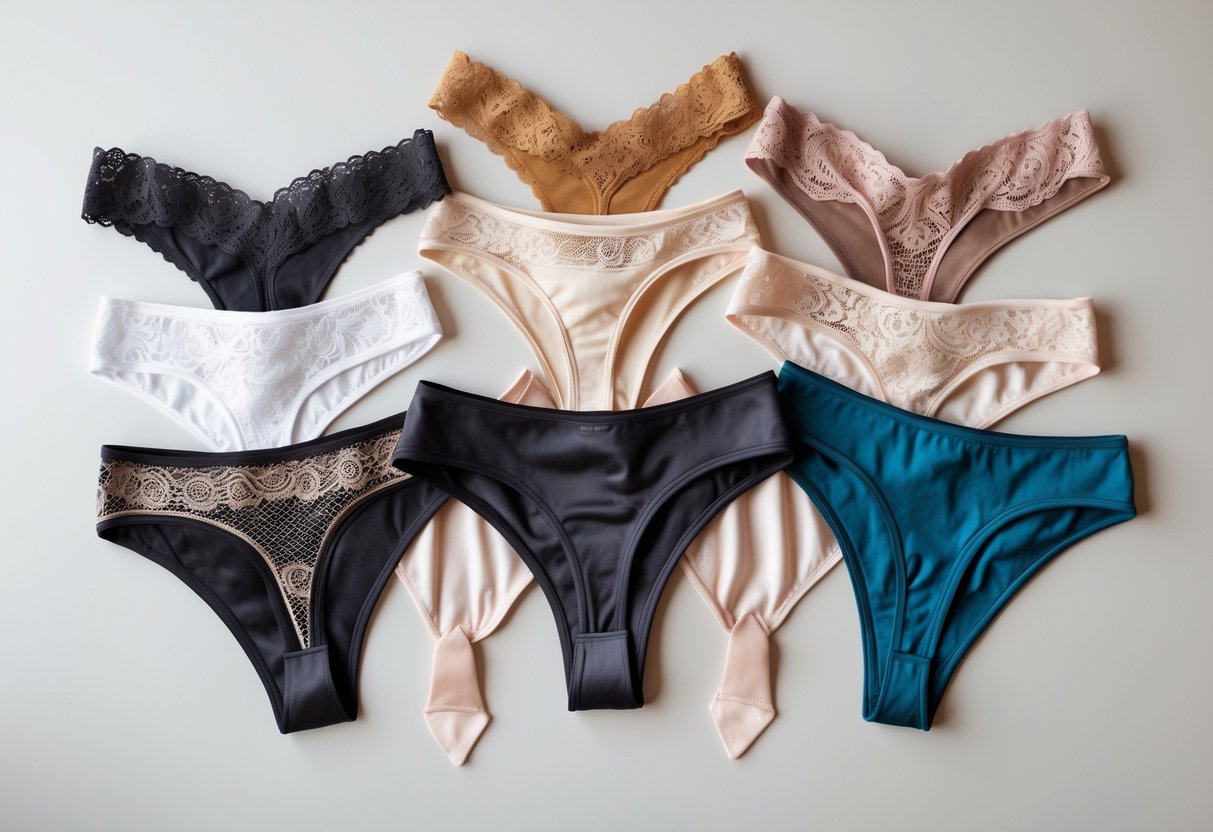
Thongs are a type of underwear that covers the front but has minimal fabric in the back. This design helps reduce visible panty lines, making them popular under tight or thin clothing.
They come in many styles, such as classic, G-string, and T-back. Each offers a slightly different fit and level of comfort.
Thongs are often made from various materials, including cotton, lace, and seamless fabrics. This variety helps people find options that suit their comfort and style preferences.
Many choose thongs to avoid panty lines during workouts, formal events, or everyday wear. Despite their minimal coverage, thongs can provide enough support when designed well.
While some find thongs very comfortable, others prefer styles with more coverage. Choosing the right thong depends on personal comfort and outfit needs.
6) G-Strings
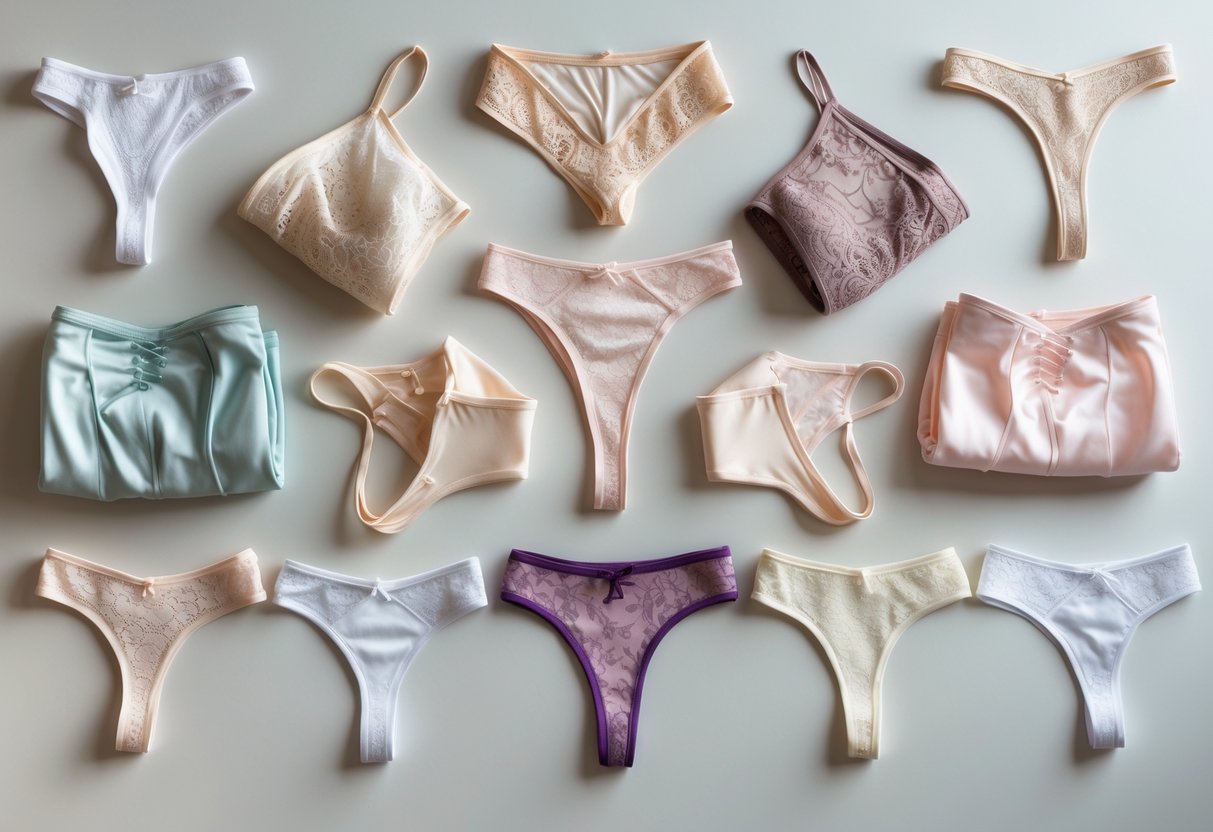
G-strings are a type of underwear known for their minimal coverage. They have a small front panel and a very thin string at the back that connects the fabric to the waistband.
This design offers almost no coverage on the rear, making G-strings popular for avoiding visible panty lines under tight clothing. They are often chosen for their mix of comfort and style.
G-strings come in different materials like cotton, lace, and microfiber. This variety allows people to select options based on comfort, appearance, and occasion.
Many prefer G-strings for special occasions or when wearing form-fitting outfits. However, some also wear them daily for the freedom and minimal fabric.
Choosing the right G-string depends on personal comfort and fit. Trying different styles and fabrics helps find the best option for each person’s needs.
7) Seamless Panties
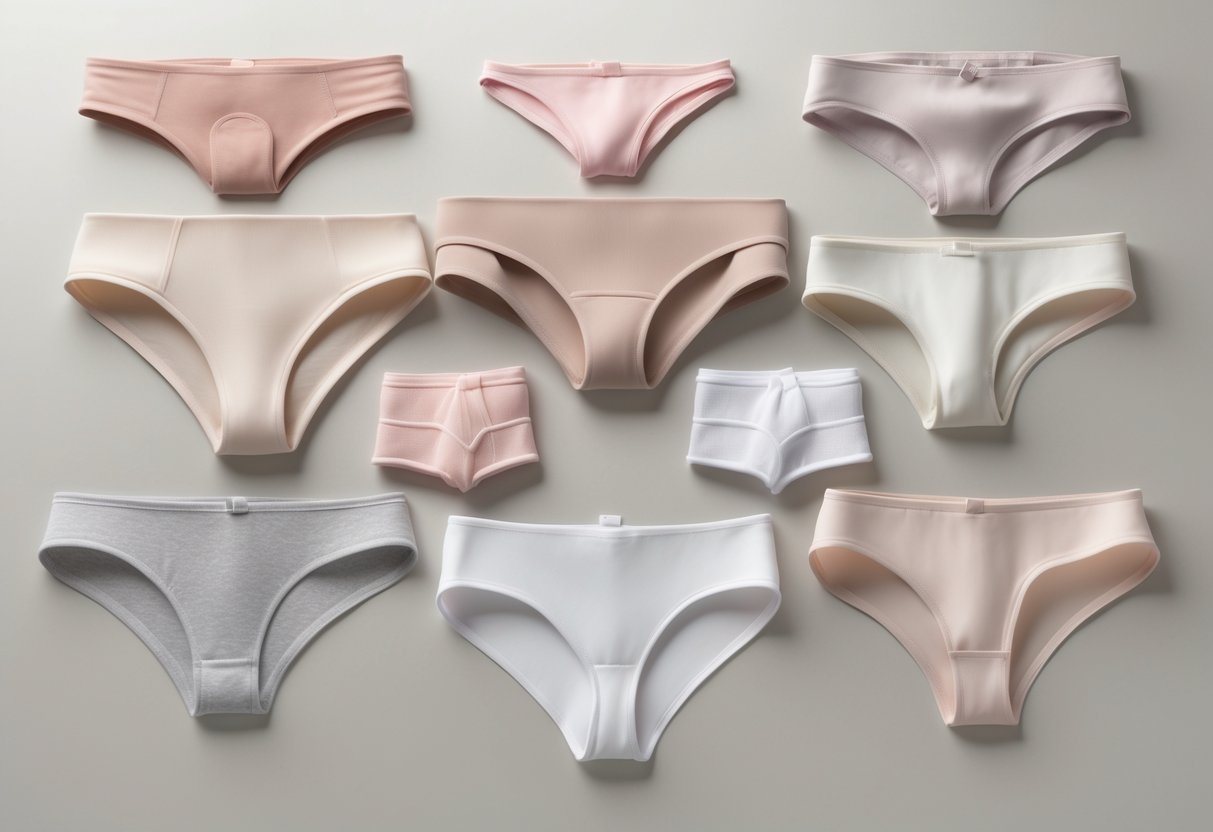
Seamless panties are designed without visible stitching or thick seams. This makes them ideal for wearing under tight or thin clothing because they don’t show lines. Many women choose them for a smooth, clean look.
These panties often use soft, stretchy fabrics like nylon or spandex. This helps them fit snugly and comfortably on different body shapes. They are also lightweight and breathable, adding to daily comfort.
Seamless panties come in many styles, including briefs, thongs, and boyshorts. They work well with high-waisted leggings, dresses, and low-rise jeans. Their no-show fit makes them popular for both casual wear and special occasions.
Many brands test seamless panties to ensure they stay in place without bunching or slipping. This makes them a reliable choice for active days. Overall, seamless panties offer a simple yet practical underwear option that balances comfort with invisibility.
8) High-Waist Panties
High-waist panties sit at or above the belly button. They provide more coverage on the tummy compared to low or mid-rise panties. This makes them a good choice for those who prefer extra support around the waist.
They often come in full-coverage styles that cover the entire rear. There are also versions with softer coverage, like high-waist briefs with a more bikini-like cut around the legs. These can show more of the upper thigh while still covering the stomach well.
High-waist panties pair well with high-waisted pants, skirts, or shorts. They help create a smooth silhouette under clothing. Many find them comfortable because they do not dig into the hips or sit low on the body.
These panties offer a classic look that some compare to styles from past decades. They are practical and can suit many body types. Choosing the right material and fit is important to ensure they feel comfortable all day.
9) Cheeky Panties
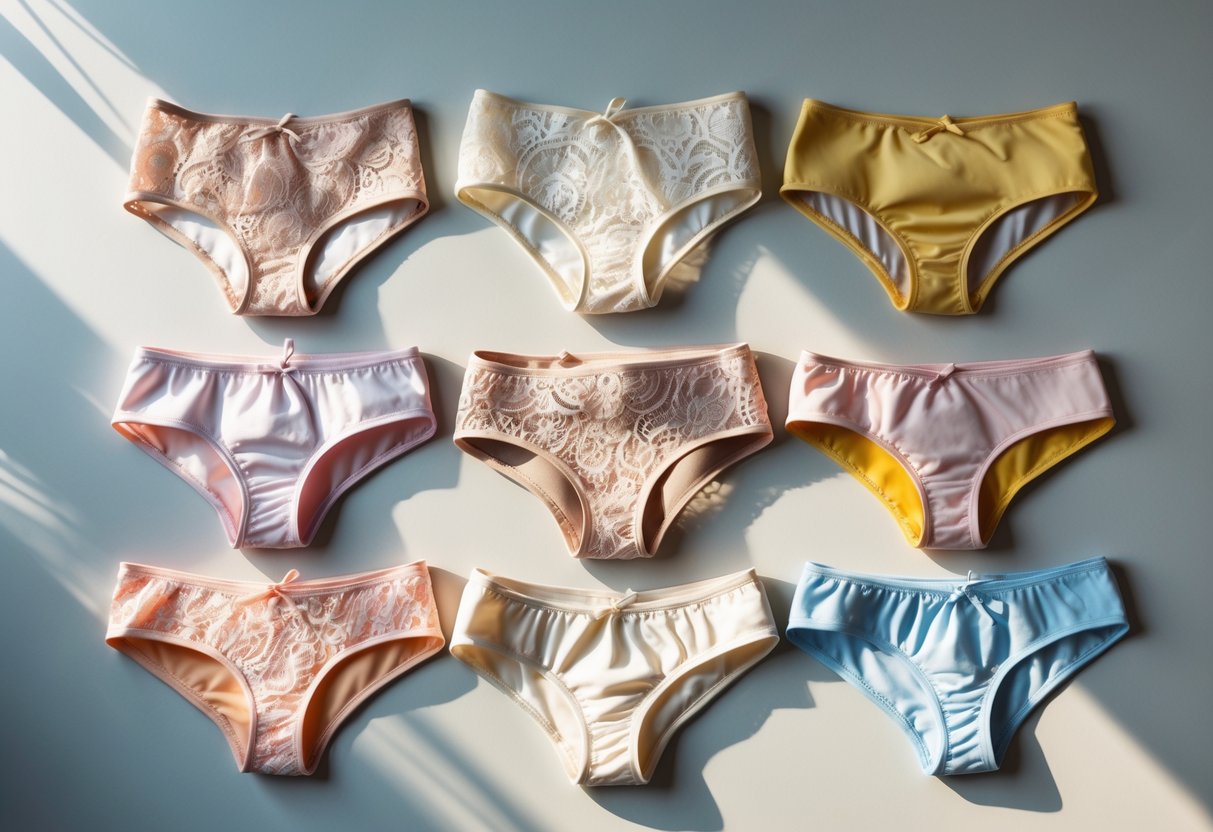
Cheeky panties have more coverage than a thong but less than a bikini. They show a bit more of the lower backside while still offering moderate coverage. This style often creates a V-shape that can make the legs appear longer.
They are designed to be comfortable and flattering. Many cheeky panties lift the butt slightly and add a playful look. They work well under jeans, skirts, and dresses without bunching or rolling.
Cheeky panties come in various materials and cuts. Some have seamless edges for a smooth fit, while others feature wider waistbands for extra support. This style is a good choice for those who want a mix of fun and comfort in their underwear collection.
10) Control Briefs
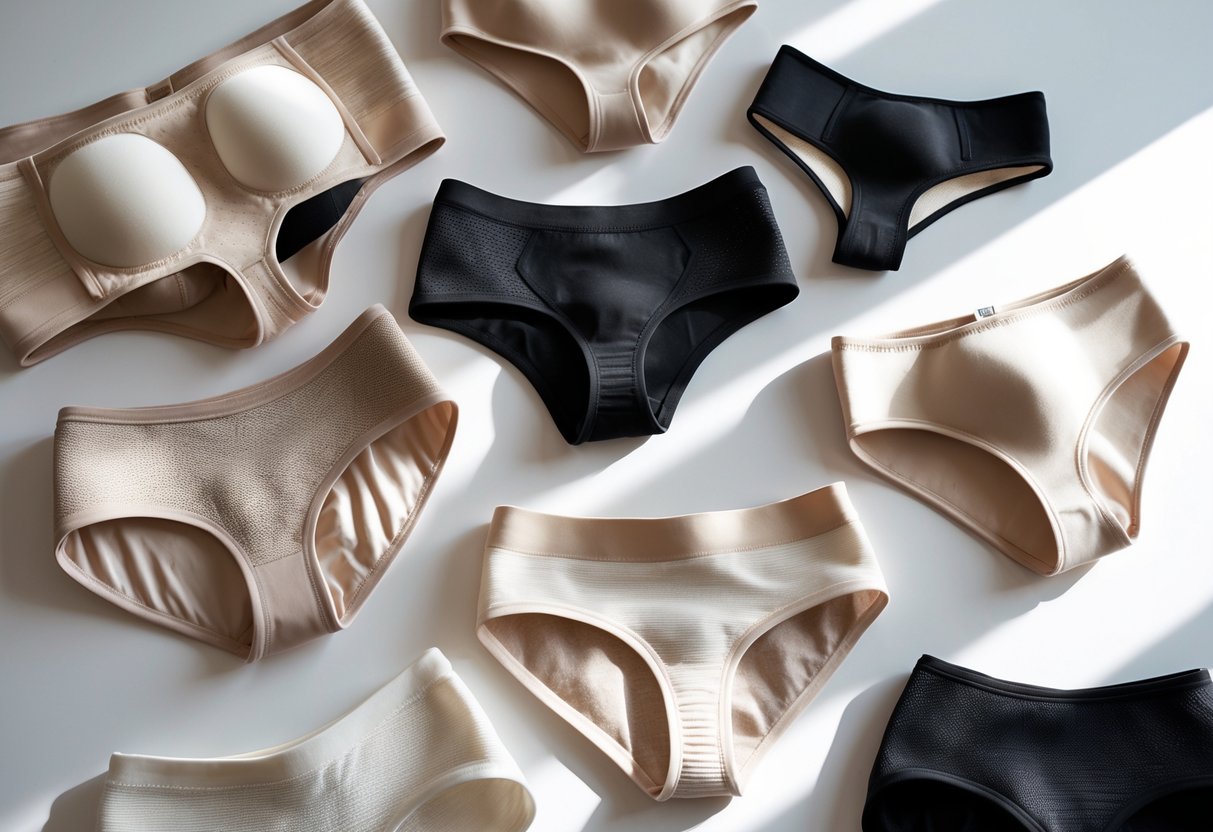
Control briefs are designed to provide extra support and shaping. They offer full coverage and help smooth the tummy and hips. This makes them a good choice for wearing under fitted clothes.
These briefs use firmer fabric to gently hold areas in place. They can create a slimmer-looking waist without being uncomfortable. Many women find control briefs helpful for special occasions or daily wear.
Control briefs come in different levels of control, from light to firm. This allows each person to choose how much shaping they want. They often have a high waist to cover more of the midsection.
Because of their design, control briefs may feel tighter than regular underwear. It is important to find the right size to avoid discomfort. Overall, they balance support with style for those who want a smoother silhouette.
How Panty Styles Influence Comfort and Fit
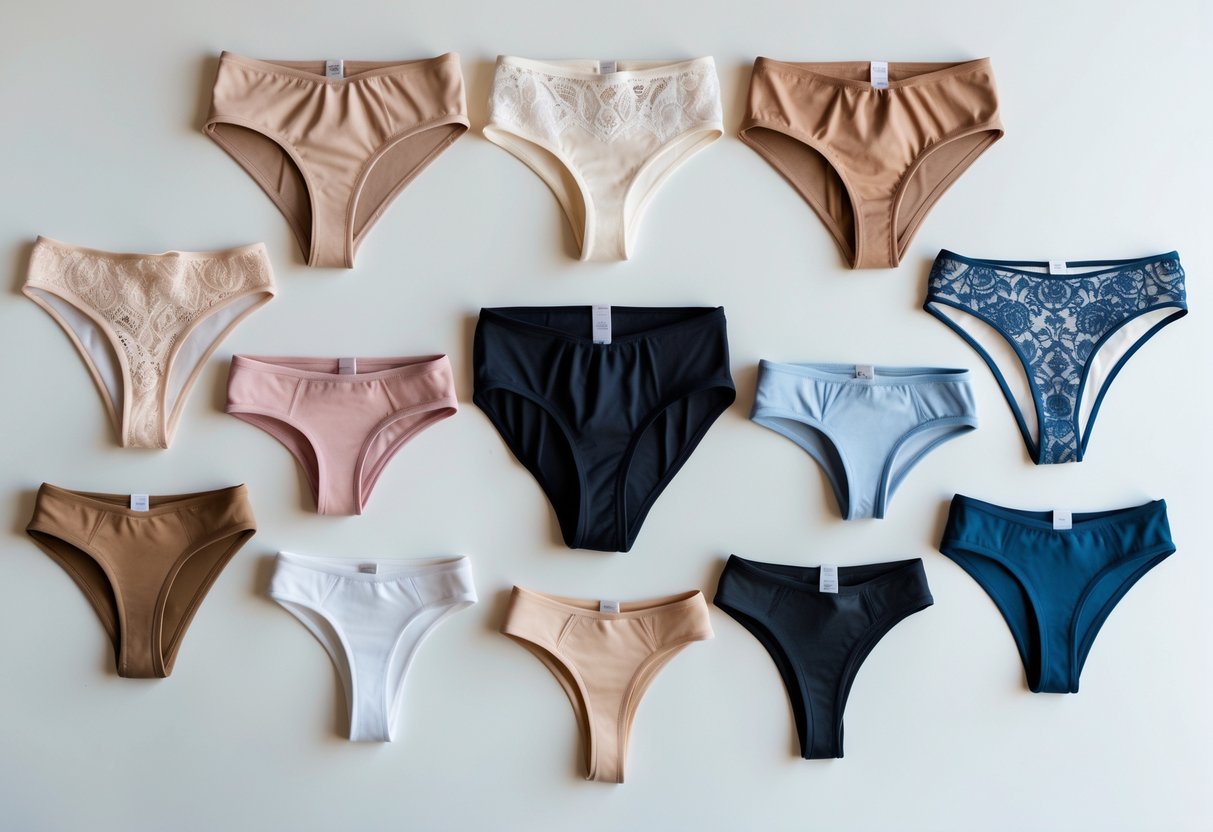
Comfort and fit depend largely on the materials used and how panties are designed around the waist and legs. These elements affect how they feel during movement and how well they suit different body shapes. Choosing the right combination can prevent irritation and provide lasting comfort throughout the day.
Fabric Choices and Breathability
Fabric affects both comfort and hygiene. Cotton is the most breathable option, helping to keep the skin dry and reduce the risk of infections. It is soft and works well for everyday wear.
Synthetic fabrics like nylon or polyester offer a smooth look, especially under tight clothing, but can trap heat and moisture. Modal and bamboo are softer alternatives that balance comfort with breathability better than purely synthetic fabrics.
Panties with a cotton gusset add extra breathability in sensitive areas. Fabrics that wick moisture away help maintain freshness during physical activity or warm weather. Choosing materials based on activity level and climate is important for overall comfort.
Waistband and Leg Openings Explained
The waistband must fit snugly without digging in or sliding down. Elastic waistbands provide stretch but quality matters—thin or stiff bands can cause irritation. Wide waistbands often distribute pressure more evenly and reduce marks on the skin.
Leg openings should offer freedom of movement without pinching. Seamed leg holes may be visible under tight clothes but can offer a better shape. Seamless or laser-cut edges reduce visible panty lines and minimize friction.
Panty styles such as briefs often have higher waistbands and fuller leg coverage, while bikinis and thongs have lower waistbands and different leg openings, catering to different comfort needs and outfit choices.
Panties for Different Occasions
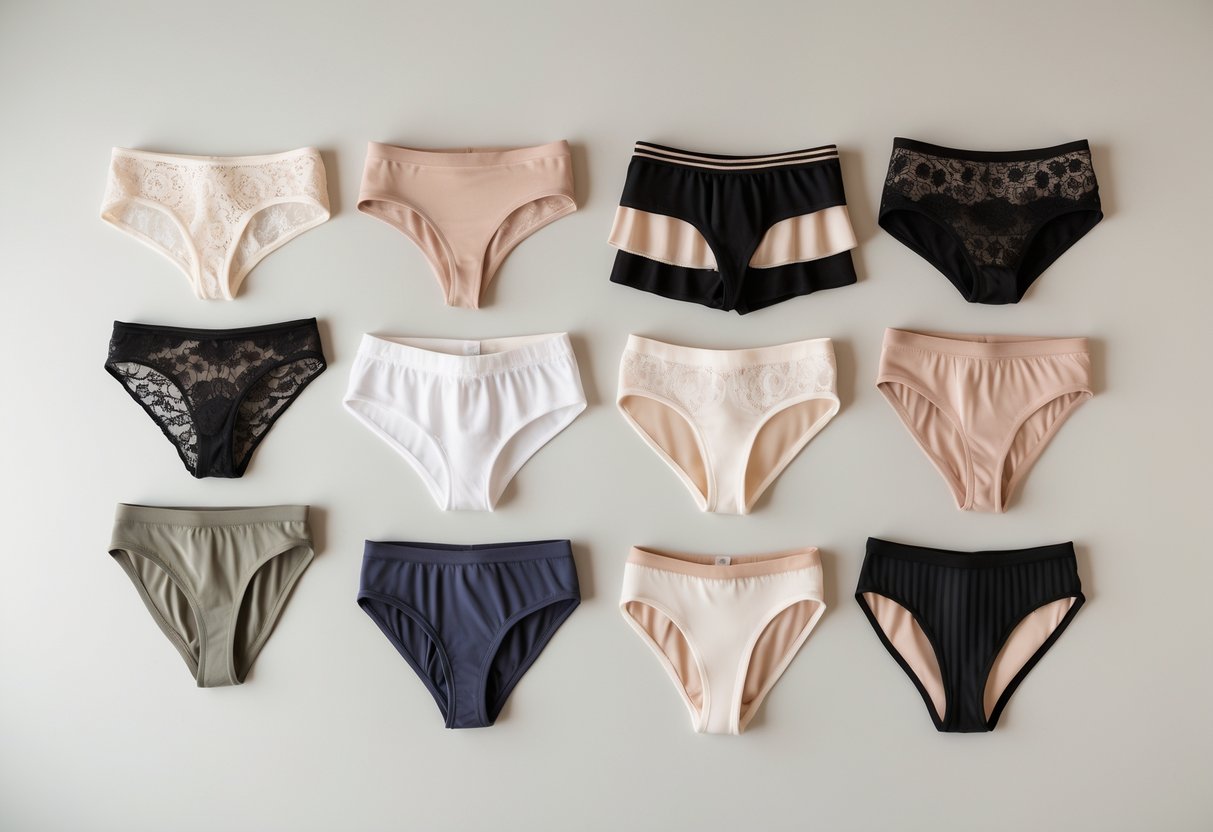
Choosing the right panties depends on comfort, outfit, and the event. Some styles work well for daily wear, while others suit special times or specific needs.
Everyday Essentials
For daily use, comfort and breathability come first. Cotton briefs and bikinis are popular because they offer good coverage and feel soft on the skin. They also absorb moisture, which helps keep the wearer comfortable all day.
Boyshorts provide more coverage and prevent chafing, making them great for active days. Seamless panties work well under tight clothes because they don’t show lines. These everyday styles focus on practicality without sacrificing comfort or fit.
Key features of everyday panties:
- Breathable fabrics like cotton or modal
- Comfortable fits, including briefs, bikinis, and boyshorts
- Styles that avoid visible panty lines (seamless or laser-cut edges)
Specialty and Functional Underwear
For special occasions or specific functions, panties vary in material and design. Thongs and G-strings minimize panty lines under tight or sheer clothing. Seamless panties with smooth fabrics enhance appearance when wearing form-fitting dresses or pants.
Maternity or period panties offer extra support or protection. Sports panties are designed with moisture-wicking fabrics and a snug fit to keep the wearer dry during workouts. Lace or decorative panties suit formal events when style matters.
Specialty panties focus on:
- Minimizing visible lines (thongs, seamless styles)
- Support and protection (maternity, period, sports underwear)
- Enhancing style for special occasions (lace, silk)
Frequently Asked Questions
Panties come in many types, each offering different levels of coverage and comfort. Materials like cotton and microfiber are common for daily wear. Some styles focus on fit details, such as French-cut panties and V-shaped designs, which change how they sit on the body. Popular brands feature classic styles like briefs and thongs, each named based on their shape and coverage.
What are the different types of panties every woman should own?
Common panties include briefs, which provide full coverage and comfort. Boyshorts have a longer leg and cover the hips. Bikinis sit below the hipbone with moderate coverage. Hipsters offer wide side coverage and rest on the hips. Thongs have minimal rear coverage, reducing visible panty lines.
What are the best materials for comfortable daily-wear panties?
Cotton is the top choice for comfort and breathability. Microfiber blends provide softness and can wick moisture. Some prefer modal or bamboo for a smooth feel. These materials help reduce irritation and keep skin dry throughout the day.
Can you explain the distinct features of French-cut panties?
French-cut panties have higher leg openings that elongate the legs visually. They usually sit at or just below the waist. This cut combines coverage with a stylish, flattering shape.
What are some popular panty styles offered by brands like Victoria’s Secret?
Victoria’s Secret offers many styles such as lace bikinis, thongs, cheekies (a style between a bikini and thong), and boyshorts. Their designs focus on both comfort and attractive, modern looks.
How do V-shaped panties differ from other styles in terms of fit and comfort?
V-shaped panties feature a front that forms a “V,” often sitting lower on the hips. This shape can create a slimming effect and reduce fabric bunching. The cut may be more comfortable under low-rise pants.
What are the naming conventions for various ladies’ innerwear styles?
Names usually reflect coverage and shape. For example, briefs have full coverage, bikinis show more skin, boyshorts mimic shorts, and thongs have minimal rear fabric. Hipsters sit between bikinis and boyshorts in coverage, while cheekies blend modesty and sexiness.